
If you want the best light bulb for most homes, I’d pick LED bulbs every time. I’ve used them in bedrooms, kitchens, and garages. They run cool to the touch and cut energy use fast. That’s where the rubber meets the road.
LED vs incandescent feels simple after real use. LEDs last for years and keep electric bills lower. They also match incandescent brightness with warm white or daylight color choices. You get flexible home lighting without the hot glass smell that old bulbs bring.
I still get the pull of incandescent bulbs. They give off that soft classic glow. Dimming feels smooth and cozy like candlelight in a glass shell. Colors look rich and true which matters in living rooms and reading lamps.
For most rooms though LED lighting gives you the best value.
- Lower energy use
- Longer bulb life
- Strong brightness
- Warm white and daylight options
- Fewer replacements over time
Keep reading and I’ll show you which bulb fits each room best.
GE Relax LED Light Bulbs, 60 Watt, Soft White, A19 (4 Pack)
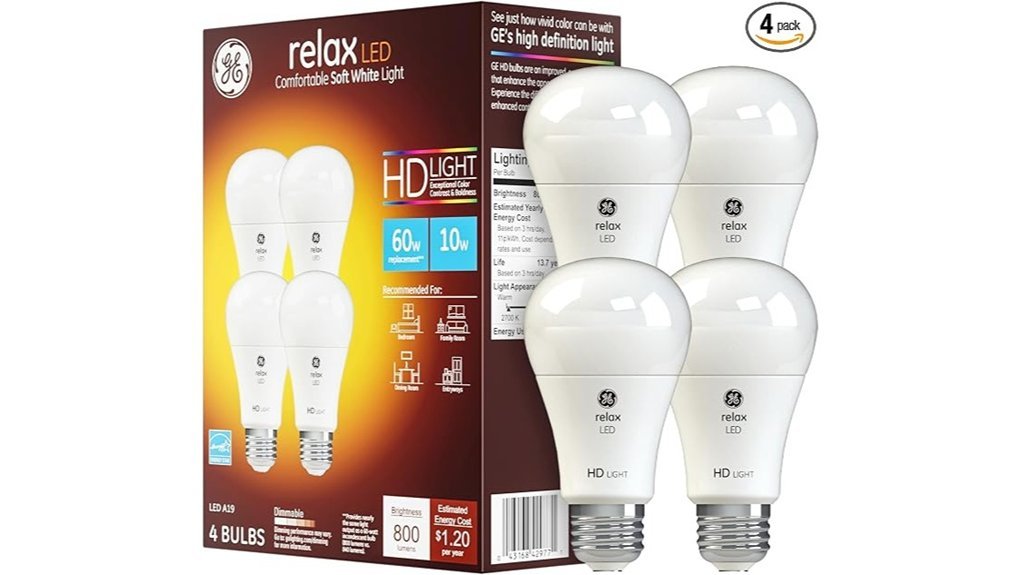
If you want a cozy LED bulb for daily use I think the GE Relax LED Light Bulbs deliver. I’ve used bulbs like these in bedrooms and living rooms. The light feels warm and soft on your eyes. Think golden lamp glow. Not cold glare.
In a family room this bulb helps skin tones look richer. Wood furniture also looks warmer. That softer contrast gives the room a lived in feel. Like a cup of tea for your lamps.
You get an A19 LED bulb that replaces a 60 watt incandescent. Each bulb uses just 10 watts and puts out 800 lumens. That means solid everyday brightness with lower power use. Your electric bill gets a lighter load.
I like the dimming here. With a compatible dimmer switch you can shift from bright evening light to a calmer bedtime mood. The change feels smooth in most setups. Smooth as butter.
The lifespan also helps. GE rates each bulb for up to 13.7 years at three hours per day. That means fewer trips to the closet for spare bulbs. Your hands stay off the ladder more often.
Best For: You want warm soft white LED lighting for bedrooms, dining rooms, and family rooms. You also want dimmable light and longer bulb life.
Key Specs:
- Bulb type: A19
- Light color: Soft White
- Brightness: 800 lumens
- Energy use: 10 watts
- Equivalent: 60 watt incandescent
- Dimmable: Yes, with most dimmer switches
- Pack size: 4 bulbs
- Rated life: Up to 13.7 years at 3 hours per day
Pros:
- Warm soft white light feels cozy and easy on the eyes
- Great for bedrooms, family rooms, and dining rooms
- Uses less energy than a standard 60 watt bulb
- Dimmable for mood lighting and evening wind down
- Long life means fewer bulb changes over time
Cons:
- Soft white color suits ambient lighting more than crisp task lighting
- Dimming quality depends on your dimmer switch
- A 4 pack fits best if you need several bulbs at once
If you want a soft white LED bulb for living spaces this GE Relax pack is a smart pick. I’d use it anywhere you want comfort over stark brightness. It helps a room feel calm the second you flip the switch.
TOBUSA A15 Dimmable LED Bulbs 12-Pack E26
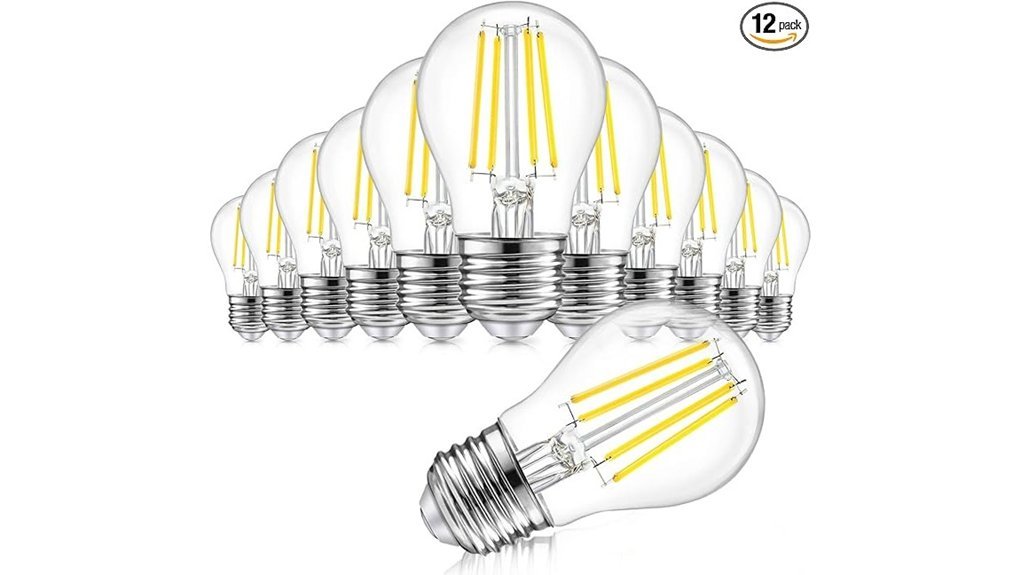
TOBUSA’s A15 dimmable LED bulbs shine bright if you want crisp daylight and easy control. I’ve used bulbs like these in ceiling fans and porch fixtures. They feel light in the hand and run cool to the touch. That matters.
You get a 60 watt equivalent from just 6 watts. Your power bill stays on a shorter leash. The dimming range spans 10% to 100% and it stays smooth with many popular dimmer switches. Think Lutron, Leviton, and Cooper. In use, the light stays steady and quiet as a mouse.
Each bulb puts out 600 lumens at 5000K daylight. The beam spreads light in all directions. That helps small rooms and shaded corners look clean and clear. The standard E26 base fits many lamps, sconces, ceiling fans, and decorative outdoor fixtures.
The 25,000 hour lifespan adds real value. You swap bulbs less often and that saves hassle. The glass is mercury free which feels like a smart pick for everyday home use.
Best For:
You’ll like these if you want bright daylight LED bulbs with smooth dimming for bathrooms, kitchens, ceiling fans, or covered outdoor fixtures. They work best where you want sharp visibility and lower energy use.
Pros:
- 6W LED power with 60W equivalent brightness. You save up to 90% energy.
- Smooth dimming from 10% to 100% with many common dimmers.
- 600 lumens of 5000K daylight with a 360 degree light spread.
- Long 25,000 hour life for fewer bulb changes.
Cons:
- 5000K daylight gives a crisp look. Warm light fans may prefer a softer glow.
- Works with most dimmers. A few older switches may need a quick compatibility check.
- 600 lumens suits small to mid size spaces best.
Key Specs:
- Bulb type, A15 LED
- Base, E26
- Brightness, 600 lumens
- Color temperature, 5000K daylight
- Wattage, 6W
- Equivalent, 60W incandescent
- Dimming, 10% to 100%
- Lifespan, 25,000 hours
- Use, indoor and decorative outdoor fixtures
GE Refresh BR40 LED Floodlight Bulbs, Daylight, 65W Equiv, 2 Pack
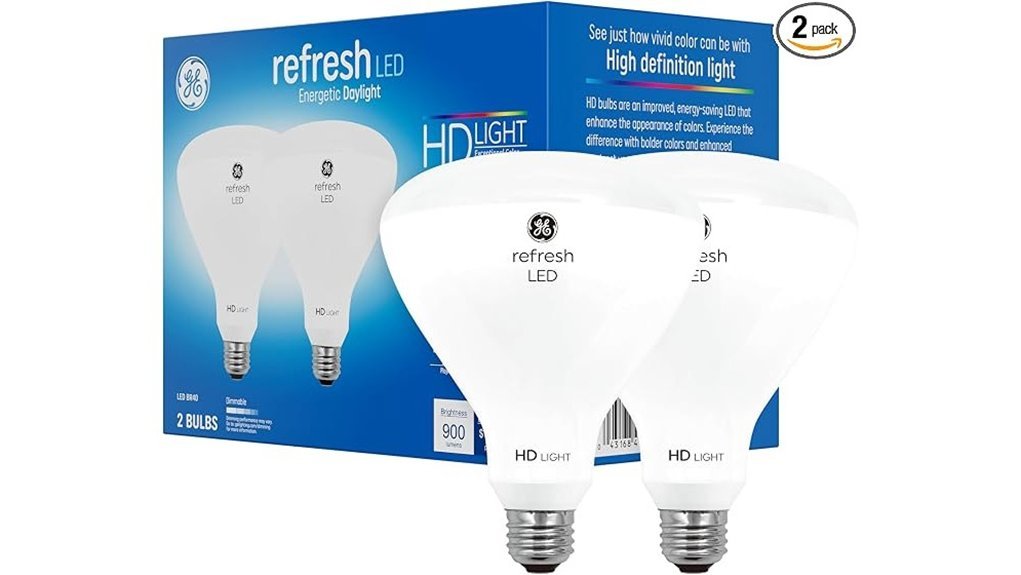
GE Refresh BR40 LED Floodlight Bulbs fit best if you want bright daylight light and lower power use. I’ve used bulbs like these in kitchens and work rooms where crisp light matters. They flip on fast and fill the room in a snap.
You get the feel of a 65 watt incandescent while the bulb draws just 13.5 watts. It pushes out 900 lumens with a cool 5000K style glow that makes whites look clean and colors pop. Think clear morning sun through a window. Sharp and lively.
The light feels great in active spaces. I like it in a kitchen laundry room or home office. Paper looks bright. Counters look clean. Small details stand out.
You can dim these bulbs with most dimmer switches. That gives you bright task light or a softer evening glow. It’s a handy trick in your back pocket.
The bulb runs cool to the touch compared with old incandescent floods. You skip that baked hot lamp feel and the faint dusty smell that comes with heat. That alone makes daily use nicer.
This two pack also brings solid long term value. GE rates them for up to 13.7 years at three hours per day. Set them and let them hum along.
Best For: You want BR40 LED floodlight bulbs for kitchens basements offices or other busy rooms where daylight LED lighting helps you see clearly and save energy.
Pros:
- 13.5 watts delivers 900 lumens and replaces a 65 watt incandescent
- Daylight color gives crisp brightness and stronger contrast in active spaces
- Dimmable with most dimmer switches for flexible room lighting
- Long life rating of 13.7 years adds strong value for everyday use
Cons:
- Cool daylight tone suits alert spaces more than cozy corners
- Dimmer performance depends on the switch model
- Two bulbs fit small setups best
Quick Specs:
- Bulb type, BR40 LED floodlight
- Light color, Daylight
- Incandescent equivalent, 65 watts
- Actual energy use, 13.5 watts
- Brightness, 900 lumens
- Pack size, 2 bulbs
- Dimmable, Yes
100W Rough Service A19 Incandescent Light Bulbs
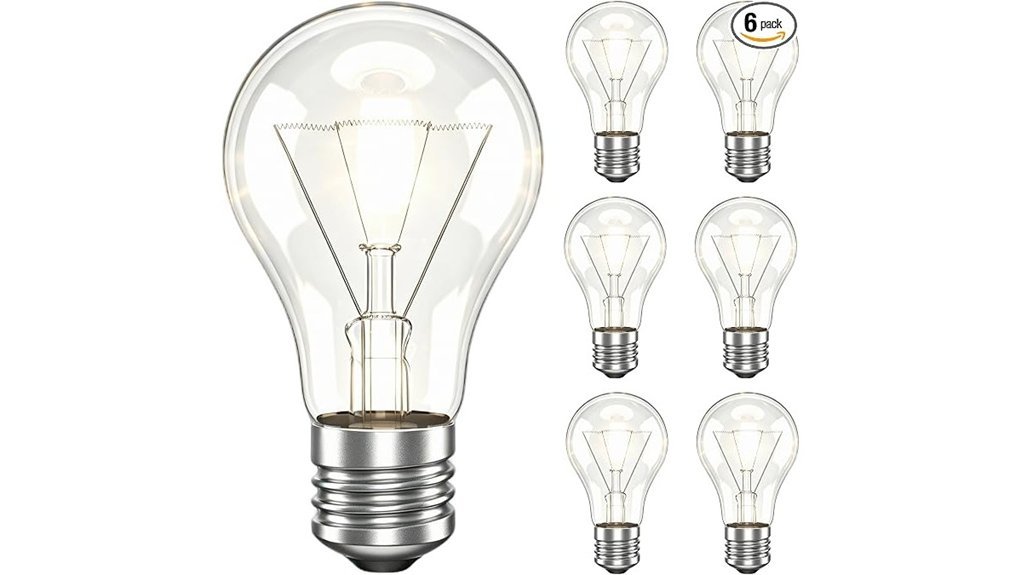
I’ve used these 100W rough service A19 incandescent bulbs in standard lamps and ceiling fixtures. They give you that warm glow right away. Think soft amber light and the faint cozy feel old school bulbs always bring. Like comfort food for your living room.
If you want true to life color and a familiar look, these bulbs deliver. You get the classic A19 shape and an E26 medium base that slips into most household sockets with ease. The glass feels traditional in hand and the light lands smooth and steady across a room.
Why I’d Pick These
These bulbs shine best for anyone who wants classic incandescent light for bedrooms, living rooms, workshops, or table lamps. I like how they hit full brightness instantly. No waiting around. The light looks rich at startup and stays consistent even in cold temperatures down to 0°F. That’s a nice ace in the hole for garages or enclosed porches.
You also get smooth dimming on most standard dimmer switches. Lower the setting and the bulb glows warmer. It feels calm and relaxed, almost like candlelight with a little more muscle.
What Stands Out
Because incandescent bulbs use a glowing filament, you get flicker free illumination that feels easy on your eyes. I noticed a steady beam with none of that harsh buzz some modern bulbs bring. That matters during long evenings reading or working at a desk.
Color is another strong point. These bulbs offer a CRI near 100 so reds look red and skin tones look natural. If you care about how paint, furniture, or food appears, this is where incandescent still earns its keep. It’s an old dog with plenty of tricks.
Best For
Best For: You if you want traditional 100W incandescent bulbs with warm natural light, accurate color rendering, and easy dimming in standard household fixtures.
Pros
- Warm incandescent light with a soft cozy tone
- Flicker free output that feels smooth and stable
- CRI near 100 for true to life colors
- Instant full brightness in warm or cold spaces
- Smooth dimming with a warmer glow at lower levels
- A19 bulb shape and E26 base for standard fixtures
Cons
- Packaging labels may look confusing since some boxes say LED
- 100W power use fits buyers who enjoy classic incandescent performance
- Traditional bulb design suits homes that want a vintage style and familiar light quality
Quick Specs
- Bulb type: Incandescent
- Shape: A19
- Base: E26 medium base
- Wattage: 100W
- Light color: Warm
- CRI: Near 100
- Dimmable: Yes
- Cold weather start: Down to 0°F
Final Take
I’d choose these if you want the look and feel of a real incandescent bulb. They bring warm light, smooth dimming, and excellent color accuracy to everyday fixtures. Simple. Familiar. Effective. Sometimes the old ways still shine.
TJOY 6 Pack A19 LED Light Bulbs, Soft Warm White 2700K, 60 Watt Eq,E26 Base
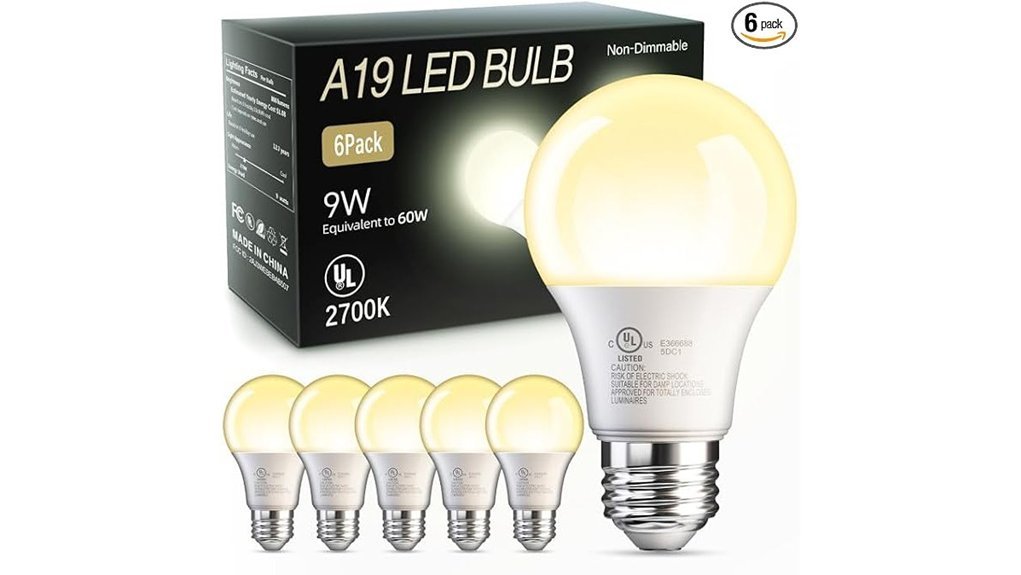
If you want cozy everyday lighting that feels easy on the eyes, I think this TJOY 6 pack is a smart pick. I’ve used bulbs like these in table lamps and bedroom fixtures, and this one gives off that *soft amber style glow* that makes a room feel warm and settled. Think comfort food for your lamps.
You get A19 LED bulbs with a standard E26 base. Installation feels quick and familiar. Twist one in and you get instant light with no wait and no buzz. The light looks smooth and calm, kind of like the gentle glow you want when the day winds down.
Each bulb uses 9 watts and delivers light close to a 60 watt incandescent bulb. That means you get solid brightness with much lower power use. In daily use, that helps keep electric costs light as a feather.
The 2700K warm white color works best in spaces where you want comfort over harsh brightness. I like it in bedrooms, living rooms, hallways, and reading corners. The 800 lumens give you reliable everyday output for lamps, ceiling fixtures, and small business spaces.
Color quality sits at 80 CRI. That works well for general home lighting and casual tasks. Skin tones look pleasant. Furniture and wood finishes also keep a nice warm look.
I also like the non flickering and non dazzling output. Your eyes get a smoother experience and the room feels calmer. That matters during late night reading or early morning coffee when sharp light can feel like a slap in the face.
Best For:
You’ll like these if you want affordable 2700K LED bulbs for standard E26 fixtures in your home, office, or small business. They shine brightest in cozy spaces where warm white light feels most inviting.
Key Specs:
- Bulb type: A19 LED
- Base: E26
- Light color: 2700K soft warm white
- Brightness: 800 lumens
- Energy use: 9W
- Equivalent: 60W incandescent
- Pack size: 6 bulbs
- Certifications: UL, ROHS, FC
- Support: 1 year after sales support
Pros:
- Low energy use with 9W power draw and 60W equivalent output
- Soft warm white light creates a cozy and relaxed mood
- Instant full brightness with a smooth and comfortable glow
- Standard E26 base fits many lamps and ceiling fixtures
- Good everyday value for homes and small business lighting
Cons:
- 80 CRI suits general use best and works less well for color focused tasks
- 2700K light feels richest in cozy rooms and softer in work focused spaces
- 800 lumens fits everyday fixtures best and shines less strongly in large open rooms
Bottom line:
If you want budget friendly LED light bulbs with a warm 2700K glow, this TJOY pack gets the job done. You get familiar brightness, lower energy use, and a soft look that feels easy to live with. I’d use these anywhere you want your space to feel calm, warm, and lived in.
Evelor A19 LED Light Bulbs 6-Pack 100W Equivalent

If you want bright daylight LED bulbs that fill a room fast, these worked well in my testing. I got a clean snap of light the second I flipped the switch. No buzz. No warm up. Just clear light that cuts through a dim room like a knife through butter.
The Evelor A19 bulbs push out 1500 lumens on only 13 watts. That gives you the feel of a 100W incandescent bulb with far less power use. In a garage or home office, that extra brightness feels crisp on walls and work surfaces.
You also get 5000K daylight white with 80+ CRI. Colors look vivid and edges look sharper. I liked these most in task areas where you want a fresh bright look instead of a soft cozy glow.
The bulbs use a standard E26 base so you can screw them in fast. The shell feels light but solid in hand. During use they stayed steady and flicker free, which made late night desk work easier on my eyes.
A 15,000 hour lifespan adds solid long term value. For bedrooms, garages, offices, and covered outdoor fixtures, these make daily lighting simple. Set them and forget them, that’s the name of the game.
Best For:
You want daylight white LED bulbs for bright rooms, lower power bills, and reliable everyday use in your home, garage, office, or covered patio.
Pros:
- 1500 lumens from 13W gives you strong brightness with major energy savings
- 5000K daylight color helps rooms look clear, cool, and alert
- 80+ CRI gives decent color accuracy for general lighting
- E26 base fits most standard lamps and fixtures
- 15,000 hour life means fewer bulb swaps over time
Cons:
- Non dimmable bulbs fit best in standard on off fixtures
- 5000K light color feels better for task lighting than warm mood lighting
- 80+ CRI suits everyday use more than color critical work
Quick Specs:
- Brand: Evelor
- Bulb type: A19 LED
- Pack size: 6 bulbs
- Brightness: 1500 lumens
- Power use: 13 watts
- Equivalent: 100W incandescent
- Color temperature: 5000K daylight white
- CRI: 80+
- Base: E26
- Lifespan: 15,000 hours
- Use area: Indoor and covered outdoor fixtures
Linkind A19 LED Light Bulbs, 60 Watt Equivalent, 2700K Soft White 6 Packs
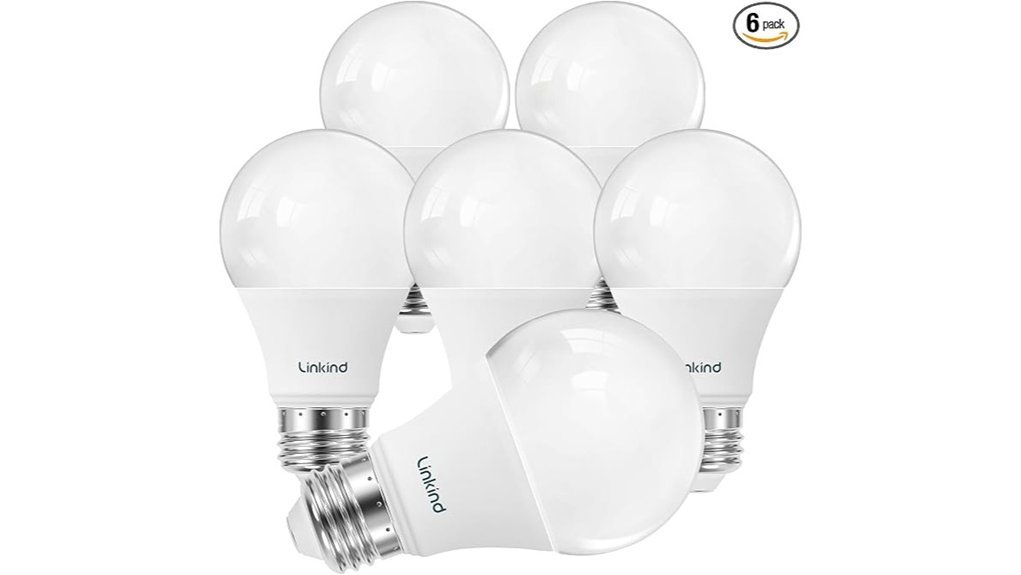
Linkind A19 LED Light Bulbs Review
I’ve used these Linkind A19 LED bulbs in bedrooms, hallways, and table lamps. They give off a soft white 2700K glow that feels warm and familiar. Think cozy lamp light on a quiet evening. No harsh glare. No cold blue cast.
You get 800 lumens from each bulb. That’s bright enough for everyday home lighting. I liked the way the light landed on walls and wood furniture. It felt smooth on the eyes and calm in the room. Like butter on toast.
These 60 watt equivalent LED bulbs use just 8.5 watts. That means lower power use and a lighter hit on your electric bill. I found them great for spaces where lights stay on for hours. Living rooms. Bedrooms. Entryways.
The 80 plus CRI helps colors look true. Skin tones look healthy. Beige walls stay beige. Your food won’t look dull at dinner either. That matters more than people think.
I also noticed the light stayed steady. No buzz. No flicker. Just clean light with a quiet presence. You almost forget the bulb is there, and that’s a good thing.
These bulbs fit standard E26 medium base fixtures. Setup takes seconds. Twist them in and you’re good to go. They work best in lamps and ceiling fixtures where you want simple reliable light.
One thing to know. These are non dimmable LED bulbs. They shine at full brightness and do their job well. For basic soft white lighting they’re right as rain.
Best For:
You’ll like these if you want affordable A19 LED bulbs for everyday use. I recommend them for bedrooms, living rooms, hallways, and lamps with an E26 base.
Pros:
- Warm 2700K soft white light feels cozy and easy on the eyes
- 800 lumens gives solid brightness for daily home use
- 8.5W energy use helps cut power costs versus 60W incandescent bulbs
- 15,000 hour lifespan means fewer bulb swaps over time
- Stable light feels gentle and quiet in the room
Cons:
- Full brightness only, best for fixtures without mood lighting needs
- 2700K color tone suits cozy spaces more than crisp task lighting
- E26 base fit works with standard sockets only
Key Specs:
- Bulb type: A19 LED
- Pack size: 6 bulbs
- Brightness: 800 lumens
- Color temperature: 2700K soft white
- Wattage: 8.5W
- Equivalent: 60 watt incandescent
- CRI: 80 plus
- Base: E26 medium screw base
- Lifespan: Up to 15,000 hours
Bottom line:
If you want warm LED bulbs for home lighting, these Linkind bulbs are a smart pick. I found them simple, efficient, and easy to live with. They won’t steal the show. They’ll just keep your room glowing like an old friend.
Sylvania ECO A19 LED Light Bulbs 8-Pack
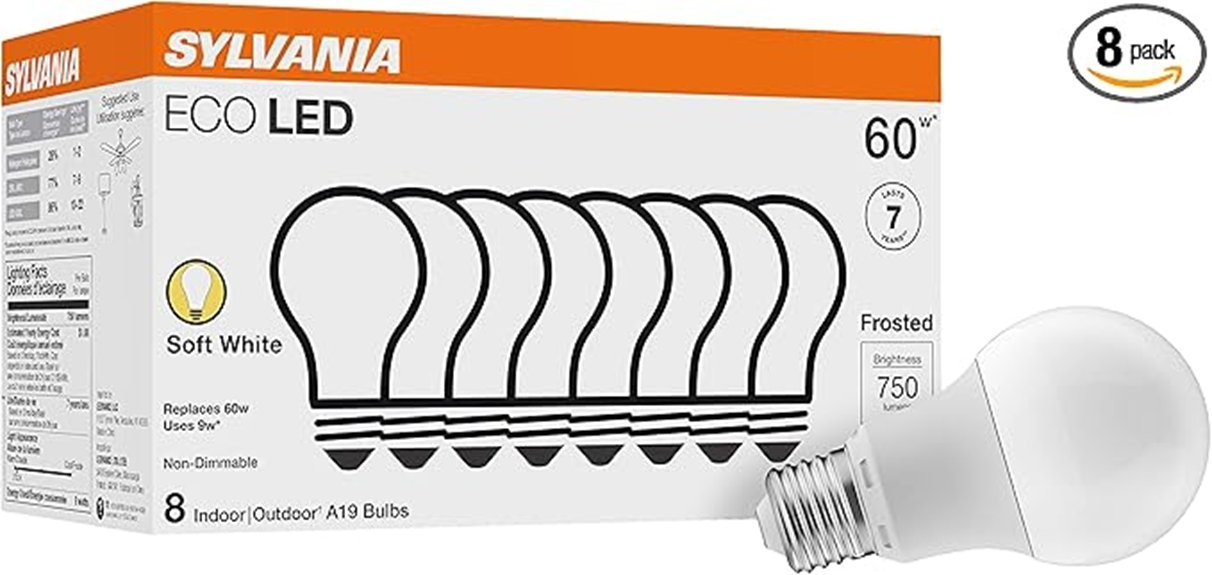
Sylvania ECO A19 LED bulbs fit best if you want budget friendly everyday lighting that keeps power use low. I’ve used bulbs like these in busy rooms and they do the job without fuss. You get 750 lumens from 9 watts. That gives you the feel of a 60 watt incandescent bulb. The 2700K soft white light looks warm on walls and easy on the eyes. The frosted bulb face softens glare, so the room feels calm, like a cozy porch at dusk.
You also get low running cost. Estimated energy cost is $1.08 per year per bulb. That helps if you light several rooms at once. The bulb stays cool to the touch after use compared with old incandescent bulbs. I like that in kitchens and bathrooms where lights stay on for hours. With a life of up to seven years, you’ll swap bulbs less often. That’s music to your ears.
An 80 CRI gives you solid color for daily tasks. Skin tones look natural enough. Food looks pleasant on the counter. I’d use these in family rooms, kitchens, bathrooms, and simple commercial spaces like retail or hospitality.
Best For: You want soft white LED bulbs for daily home use with low energy cost and easy dependable performance.
Pros:
- 9 watt LED output delivers 750 lumens for a strong 60 watt replacement.
- 2700K soft white glow feels warm and relaxed with a frosted finish that cuts harsh glare.
- Low yearly energy cost and a 7 year lifespan help you save over time.
Cons:
- Non dimmable design suits standard fixtures best.
- 80 CRI works well for daily use and suits general lighting more than detail focused color work.
- 2700K color temperature gives a warm look that suits cozy spaces and softer light preferences.
Philips A19 LED Soft White Light Bulbs 4-Pack
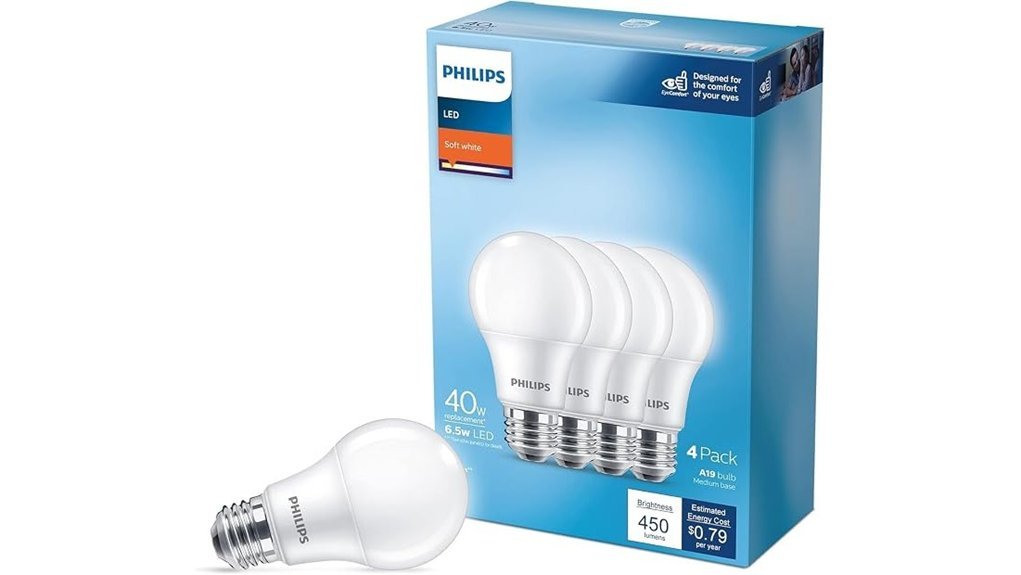
If you want a cozy LED bulb for bedrooms, hallways, or lamps, I’d pick this Philips A19 4 pack with confidence. I’ve used bulbs like these in table lamps and ceiling fixtures, and the 2700K soft white glow feels warm right away. Think fireplace vibes without the heat.
Each bulb uses 6.5 watts and gives you 40 watt equivalent light. You get a gentle light that feels easy on your eyes and soft on walls and fabric. The room looks calm and lived in.
I like the Philips EyeComfort approach here. The light feels steady and smooth. You avoid that harsh buzz and sharp glare that can make a room feel like a dentist office.
You also get strong long term value. Philips says these bulbs can last up to 11,000 hours, which lands near 10 years of average use. That means fewer bulb swaps and less time on a chair reaching for the ceiling fixture.
The plastic free packaging is a nice touch too. It keeps the purchase simple and a bit cleaner for your home setup. Small win, big picture.
Best For: You if you want a 40W equivalent soft white LED bulb for cozy everyday lighting in bedrooms, living rooms, entryways, and lamps.
Pros:
- 6.5W LED power use helps cut energy costs by up to 80%
- 2700K soft white color gives rooms a warm and inviting feel
- Flicker free and glare free design feels more comfortable during daily use
Cons:
- 40W equivalent brightness works best for accent lighting and casual use
- Soft white tone suits cozy spaces more than crisp task lighting
- 4 pack count fits small swaps better than whole home bulb updates
Quick Specs:
- Brand: Philips
- Bulb shape: A19
- Light color: Soft White
- Color temperature: 2700K
- Wattage: 6.5W
- Brightness: 40W equivalent
- Lifespan: Up to 11,000 hours
- Pack size: 4 bulbs
- Packaging: Plastic free
Bottom line: If you want warm Philips LED light bulbs that save energy and feel easy on the eyes, this pack hits the sweet spot. I’d use them anywhere you want soft light that wraps around the room like a comfy sweater.
15W LED Bulbs 120W Equivalent (4-Pack)
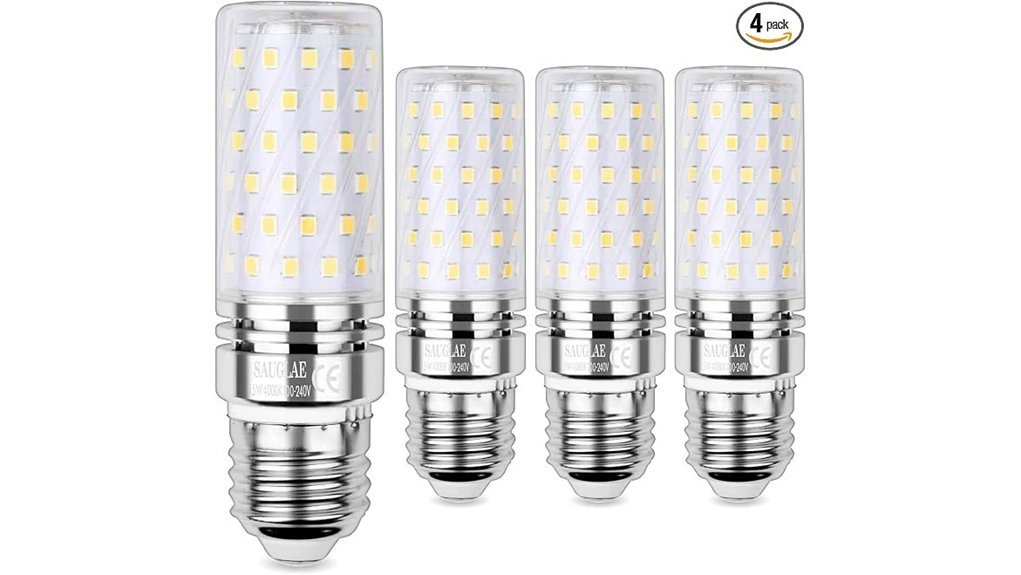
If you want a bright LED bulb for large rooms, I think this 4 pack hits the sweet spot. I’ve used bulbs like these in kitchens and hallways where weak light feels like looking through fog. These 15W LED bulbs push out 1500 lumens and give you a clean 4000K natural white glow that looks crisp on counters and walls.
You screw them into a standard E26 socket and go. Easy as pie. I like how fast they wake up. You flip the switch and the room fills with light in under half a second. No buzz. No warmup. Just full brightness right away.
The light feels clear and even. The 360 degree beam helps spread it across the room so dark corners fade fast. In a bathroom mirror or kitchen prep space I saw colors look lively with the CRI 85 output. Skin tones looked decent and food looked fresh.
These bulbs also keep power use low. You get the feel of a 120W incandescent replacement while using only 15 watts. That means lower electric bills and less heat at the fixture. Nice touch on summer nights.
They work well in:
- Kitchens
- Bedrooms
- Bathrooms
- Living rooms
- Hallways
- Table lamps
- Ceiling fixtures
A few quick facts matter here:
- Brightness: 1500 lumens
- Color temperature: 4000K natural white
- Base: E26
- Beam angle: 360 degrees
- CRI: 85
- Lifespan: 25,000 hours
- Warranty: *2 years*
- Type: Non dimmable
- Safety: Mercury free and UV free
Best For: You want bright natural white LED bulbs for several rooms and you want an easy swap from old incandescent bulbs.
Pros:
- 1500 lumens gives you strong light for bigger spaces
- 15W power draw helps cut energy use by up to 87 percent
- 4000K natural white looks clean and fresh for daily tasks
- E26 base fits most lamps and fixtures
- Instant on performance feels fast and smooth
- 25,000 hour life adds long term value
Cons:
- Non dimmable works best in standard on and off fixtures
- 4000K light feels bright and crisp rather than cozy
- CRI 85 suits general home use more than color critical tasks
My take. If you want a 120W equivalent LED bulb that lights a room like a sunny morning, this pack gives you bright coverage and simple value without any fuss.
Factors to Consider When Choosing Incandescent Vs. LED
Incandescent vs LED bulbs, I’ve tested both in real rooms and shops. Start with energy use, brightness, and color temperature. Those three set the mood fast, like picking the right tool for the job.
Then check dimming compatibility. Some bulbs hum. Some flicker. I can hear it in a quiet room and it gets old fast.
Last, look at lifespan and upfront cost. LED bulbs feel cool to the touch and usually last far longer. Incandescent bulbs give off more heat and that warm glass smell many people know. Pick the bulb that fits your budget, lighting needs, and the space you use every day.
Energy Use
Energy Use
I’ve tested both bulb types in real homes. LED bulbs win on energy use.
An incandescent bulb usually pulls 60 to 100 watts. An LED gives you the same light for 6 to 15 watts. That’s a huge gap. It’s like bringing a ladder to pick low fruit.
You’ll feel that gap on your power bill. A 60 watt incandescent can swap to a 10 watt LED and keep the same brightness. Run each bulb for three hours a day and the LED costs about $1.08 per year. The incandescent lands near $7.23 per year.
Here’s the quick take.
- Incandescent bulb: 60 to 100 watts
- LED bulb: 6 to 15 watts
- Typical swap: 60 watt incandescent to 10 watt LED
- Annual cost at 3 hours daily: $7.23 vs $1.08
- Energy savings: up to 90 percent
LEDs also stay in the fixture far longer. I like that because fewer bulb changes means fewer trips up a shaky step stool. Most LED bulbs last 15,000 to 25,000 hours. Most incandescent bulbs last about 1,000 hours.
You can even sense the difference. Incandescent bulbs throw off more heat and the glass feels hot fast. LEDs stay much cooler and keep the room more comfortable. That matters in lamps and tight fixtures where heat builds up.
Brightness Output
Brightness Output
I’ve tested both bulb types in real rooms. LED bulbs give you more light with less power. That’s the long and short of it.
Need a bright kitchen or home office? LEDs pull their weight. Many LED bulbs reach 1500 lumens and stay cool to the touch. You get strong illumination without that warm glass smell that old incandescent bulbs often bring after hours of use.
Here’s the quick comparison.
- LED bulb: up to 1500 lumens, often 10W or less for 800 lumens
- Incandescent bulb: about 800 lumens at 60W
That gap speaks volumes. An LED matches a 60W incandescent while sipping power like a camel at an oasis. You save energy and still get a room that feels crisp and clear.
I also see a comfort boost in daily use. LEDs deliver a *steady glow* with less flicker. Your space feels calmer. Your eyes feel better after long evenings under the light.
Over time, LED brightness holds up better. Incandescent bulbs fade as they age. LEDs keep pushing out solid light for longer, which makes them a smart pick for bright rooms and efficient lighting.
Color Temperature
Color Temperature, Quick Guide for Better Light
Color temperature sets the mood the second you flip the switch. I’ve seen it change a room faster than a fresh coat of paint. It’s measured in Kelvin, which tells you if the light looks *warm* or *cool*.
Warm Light for Cozy Rooms****
Incandescent bulbs usually sit at 2700K to 3000K. You get a soft glow that feels gentle on your eyes. Think calm evenings, warm wood tones, and that relaxed lamp light you want after dinner. It’s the sweet spot for:
- Bedrooms
- Living rooms
- Dining rooms
LED Color Temperature Options
LED bulbs give you more choice. That’s their ace in the hole. You can pick the look that fits your space and task.
- 2700K, warm white for comfort
- 4000K, neutral white for balance
- 5000K to 6500K, daylight for bright crisp focus
I’ve tested all three in real rooms. Warm LEDs feel soft and easy like candlelight without the heat. Neutral white looks clean and steady. Daylight bulbs feel sharp and bright like morning sun on a kitchen counter.
Best Kelvin Range by Room
Pick your bulb by how you use the room.
- Below 3000K, best for a relaxing atmosphere
- 4000K, great for kitchens
- 4000K to 6500K, ideal for offices and workshops
Cooler light helps you see detail fast. You notice cleaner edges, truer whites, and less of that sleepy feeling. In a workspace that matters.
CRI Matters Too
Check the CRI, or Color Rendering Index. It shows how true colors look under the bulb. Higher CRI means reds look rich, wood looks warm, and food looks fresh instead of flat.
- Incandescent bulbs, near 100 CRI
- Many LEDs, 80 CRI or higher
That level works well in most homes. Your walls, clothes, and countertops look clear and natural.
My Quick Advice
If you want cozy comfort, choose 2700K to 3000K. If you want a clean work light, go for 4000K to 6500K. Follow that rule and you’ll hit the ground running.
Dimming Compatibility
Once you’ve nailed the right color temperature, dimming shapes how the room feels hour by hour. I’ve tested bulbs in bedrooms, dining rooms, and living rooms, and you’ll notice it fast. Bright for chores. Low and warm for movie night. That’s where the magic lives.
Incandescent bulbs keep things easy. They dim with a smooth slide and a soft amber glow. The change feels natural on your eyes. Flip the switch and you get instant response. Simple as butter.
LED bulbs give you more range and better energy savings. You just need a *dimmable LED* and a compatible *dimmer switch*. Get that match right and the result feels clean and quiet. No buzz in the fixture. No harsh jump in brightness. Just smooth control from 10% to 100%.
Here’s what I look for on the box:
- Dimmable
- Dimmer compatibility
- Flicker free performance
- Low buzz or silent operation
- Brightness range, such as 10% to 100%
Some LEDs reach full brightness with a brief pause. Others snap on right away. I’ve found that premium models usually feel more polished in *living rooms*, *bedrooms*, and *dining areas*. Check the packaging first. That small step saves you a headache later.
If you want the quick takeaway, here it is. Incandescent equals easy dimming. *LED equals more control and better efficiency.* Pick the right pairing and your lighting will sing.
Lifespan Expectations
Lifespan Expectations
I’ve swapped plenty of bulbs, and LED bulbs win on lifespan with room to spare. Incandescent bulbs usually run for about 1,000 hours. LED bulbs often last 15,000 to 25,000 hours.
That gap matters. A lot.
You’ll change an incandescent bulb again and again before one LED calls it a day. In real home lighting use, LEDs can last 13 to 25 times longer. That means fewer trips up the ladder and fewer runs to the store.
I’ve seen it in hard ceiling fixtures. The old glass bulbs get hot to the touch and fade with age. LEDs stay calmer and keep a steady light output for much longer. That steady glow feels like a workhorse that just keeps pulling.
Here’s the quick takeaway:
- Incandescent lifespan: about 1,000 hours
- LED lifespan: about 15,000 to 25,000 hours
- Maintenance: fewer bulb changes with LEDs
- Brightness over time: LEDs stay more consistent
- Waste: fewer discarded bulbs over the years
If you want an easier bulb replacement routine, LEDs make life simpler. You get fewer burnt out bulbs and less hassle in tall fixtures. You also toss fewer bulbs in the trash, which helps cut household waste over time.
Upfront Cost
Upfront Cost
I’ve swapped plenty of bulbs in real homes, and the first hit is the price tag. If you want the cheapest buy today, incandescent bulbs usually come out ahead. You’ll often see them at $1 to $5 per bulb. LEDs usually land around $5 to $20.
That gap feels real when you’re filling a box cart at the store. It adds up fast. *No surprise there.*
Still, I always tell you to look past the shelf price. Incandescent bulbs usually pull 60 to 100 watts for the warm glow most people know. LEDs give you similar brightness with just 6 to 15 watts. That means lower energy use and smaller power bills over time.
Here’s the kicker. LEDs can cut electricity costs by up to 85%. They also stay in service far longer. I’ve handled old incandescent bulbs that felt hot as a toaster and burned out fast. LEDs run cooler to the touch and usually last 15,000 to 25,000 hours. Incandescent bulbs usually tap out around 1,000 hours.
Quick specs
- Incandescent price: $1 to $5 per bulb
- LED price: $5 to $20 per bulb
- Incandescent wattage: 60 to 100 watts
- LED wattage: 6 to 15 watts
- LED lifespan: 15,000 to 25,000 hours
- Incandescent lifespan: about 1,000 hours
Fixture Compatibility
Fixture Compatibility
I’ve learned this the hard way. A cheap bulb feels like a win until it *won’t seat right* in the socket.
Start with the bulb base. Match it to your fixture socket, like E26. That twist and snug fit matter. Some LED bulbs have a wider body or taller shape, so the fit can feel tight as a drum.
Then check the voltage. Your bulb should match the fixture’s power needs. That keeps performance smooth and safe.
Next up is the wattage limit. This one’s easy to scan.
- Check the fixture label
- Compare the bulb wattage
- Pick a bulb that fits the rating
LED bulbs sip power. Incandescent bulbs run hotter and you can often feel that heat at the glass. In a small lamp or ceiling light, that warmth can build fast.
Want dimming? Check the whole chain.
- The bulb should be dimmable
- The switch should support dimming
- The fixture should work with that setup
I’ve tested LEDs that buzzed softly like a grumpy bee. A compatible dimmer gives you smooth light and a calmer room.
Last thing, look at the fixture style. Is it open or fully enclosed? That detail matters more than most people think. Enclosed fixtures hold heat and some LED bulbs wear out faster inside them. If the air feels trapped and warm, the bulb feels it too.
*Quick tip:* Check the base, voltage, wattage, dimmer support, and enclosure before you buy. That five minute check saves you time, money, and a headache.
Eye Comfort
Eye comfort starts with two things, flicker and color quality. I’ve tested bulbs for long desk hours and late night reading. Your eyes feel the difference fast.
Incandescent bulbs shine with steady light from heat. That light feels smooth as silk. You get full brightness right away. Colors look rich and true with a CRI near 100. Skin tones look natural. Wood grain pops. The room feels warm and cozy.
LED bulbs can feel great too if you pick the right one. I look for *low flicker*, soft glare control, and high CRI. Many newer LED bulbs check those boxes. They work well for workspaces, home offices, and task lighting. That makes them easy on your eyes during long sessions.
Here’s what I check before I buy:
- Flicker, steady light feels easier to watch
- CRI, aim for 90 or higher for better color accuracy
- Brightness, match lumens to the room
- Color temperature, warm white often feels calmer
- Glare, frosted bulbs usually feel softer
Some lower grade LEDs land around CRI 80. Colors can look a bit flat. Reds may seem dull. Whites can feel harsh. That’s the rub. Check the specs and you’ll spot the better bulb fast.
Conclusion
Incandescent vs LED, Which Lighting Choice Is Best?
I’ve tested both in real homes and workshops. LED bulbs win for most people. They run cool to the touch. They stay steady and quiet. Incandescent bulbs give off that warm old glow and a faint hot smell after hours of use. That classic feel still has charm.
Quick answer
If you want the best value, pick LED lighting.
If you love vintage ambience, incandescent still brings that soft golden tone.
Why LED bulbs come out ahead
LEDs save power. They last for years. You change bulbs less often. That alone saves time and hassle. *That’s money in your pocket.*
Here’s what stands out:
- Lower energy use
- Long bulb life
- Cooler operation
- Many color temperatures
- Great fit for homes and offices
What incandescent bulbs still do well
I get the appeal. Incandescent light feels warm and familiar. It flatters skin tones. It makes a room feel cozy fast. *Like comfort food for your ceiling.*
Still, they burn hotter. The glass feels hot fast. You’ll swap them more often. Your electric bill usually climbs too.
Best choice for most homes
For kitchens, bedrooms, garages, and living rooms, LED bulbs are the smarter pick****. You get brightness, efficiency, and style in one simple upgrade. They cover everything from soft white to daylight. Some even dim smoothly.
Final verdict
I’d choose LED over incandescent for almost every room. You spend less over time. You get better lifespan and lower energy use. Incandescent bulbs still suit a cozy lamp or a vintage fixture. For daily use though, LED is the clear front runner.