
If you want top speed and heavier shielding then I’d pick *Cat 8*.
I’ve handled both and Cat 8 feels thicker in your hand and more stiff at the bend. It clicks into the port with a sharp snap, like a seatbelt locking in place. You get up to 40 Gbps and 2000 MHz. That makes it a strong fit for gaming, 4K streaming, 8K streaming, and a smart home network with lots of traffic.
If you want solid value for daily use then *Cat 6* makes more sense.
It’s easier to route through a desk or wall and it usually costs less. In real home and office setups I’ve found Cat 6 delivers fast Ethernet performance for work calls, web use, and streaming. It’s the workhorse of the bunch.
So which Ethernet cable should you buy?
- Choose Cat 8 for:
- 40 Gbps support
- 2000 MHz bandwidth
- Better shielding for signal quality
- High speed gaming and media setups
- Choose Cat 6 for:
- Everyday home internet
- Office networking
- Lower cost
- Easier cable runs
My take: Cat 8 is the faster pick and the more future ready option.
Cat 6 is the smart buy for most people. Your best choice comes down to your internet speed, network setup, and budget.
DbillionDa Cat 8 Ethernet Cable, 6FT 40Gbps 2000MHz RJ45 LAN Cable
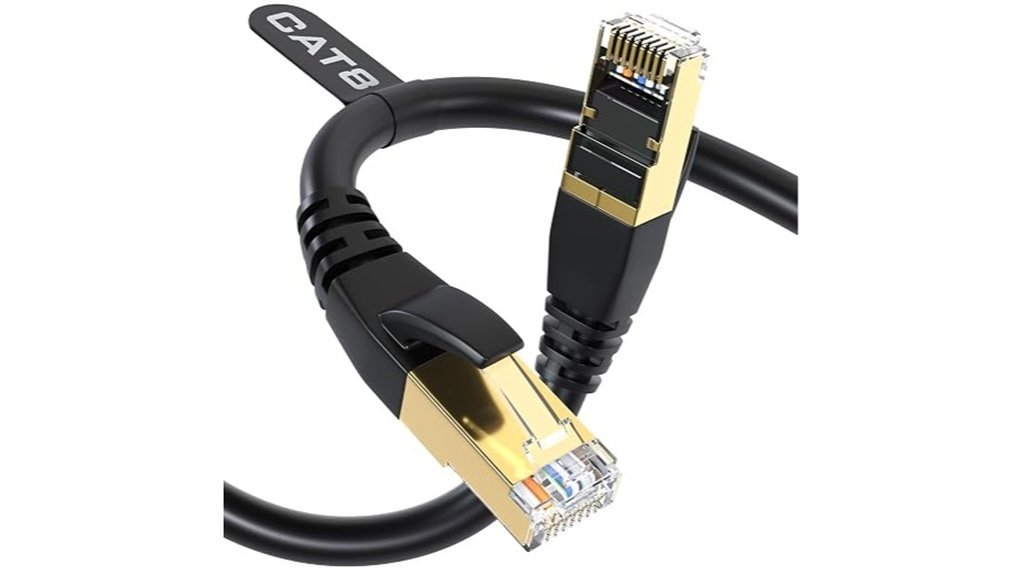
If you need a short cable that can really hustle, I’d pick the DbillionDa Cat 8 Ethernet Cable, 6FT first. I’ve used cables like this in gaming rigs and media setups. This one feels thick in the hand and the jacket has that firm PVC touch that says *built for work*. It pushes up to 40Gbps and 2000MHz. Fast as a cheetah on espresso.
Inside, you get 26AWG copper conductors and F/FTP shielding. That means each twisted pair has foil around it. In plain English, you get better protection from signal noise. I like that in apartments and office corners where routers and power cords crowd each other. The connection stays clean and quiet.
The outer jacket is waterproof PVC with UV and corrosion resistance. I’ve handled outdoor cables that feel chalky after sun exposure. This one aims for the opposite. It works well for indoor runs and outdoor spots where weather can bite. Rain or shine, it keeps its chin up.
You also get shielded RJ45 connectors for a snug fit with routers, modems, switches, servers, smart TVs, and game consoles. Setup feels simple. Click, lock, done. It also supports older standards like Cat7, Cat6, Cat5e, and Cat5. That gives you room to plug it into almost any Ethernet port you already use.
Best For
You’ll like this cable if you want a short high speed Ethernet cable for:
- Gaming
- 4K or 8K streaming
- Smart home devices
- Router to switch connections
- Indoor or outdoor networking
- Areas with EMI or RFI interference
Why I’d Recommend It
For a short run, this Cat 8 cable hits the sweet spot. You get speed, shielding, and weather resistance in one tidy package. It’s like bringing a raincoat to a cloud fight.
Pros
- Supports up to 40Gbps and 2000MHz for fast data transfer
- F/FTP shielding helps cut EMI and RFI for a steady network signal
- 26AWG conductors support strong performance on demanding setups
- Waterproof PVC jacket works well indoors and outdoors
- UV resistant and anti corrosion build adds long term durability
- Shielded RJ45 ends fit common network devices with ease
- Backward compatible with Cat7, Cat6, Cat5e, and Cat5
- Includes 18 month support
Cons
- 6FT length suits short runs best
- Heavy shielding gives it a stiffer feel
- Cat 8 speed shines most on high performance network gear
Quick Verdict
If you want a 6FT Cat 8 Ethernet cable for gaming, streaming, or a clean router setup, this one delivers. I’d use it where speed matters and interference loves to snoop. It’s short, tough, and ready to fly.
Dacrown Cat 8 Ethernet Cable 6FT 2Pack, 40Gbps 2000MHz High-Speed Cord
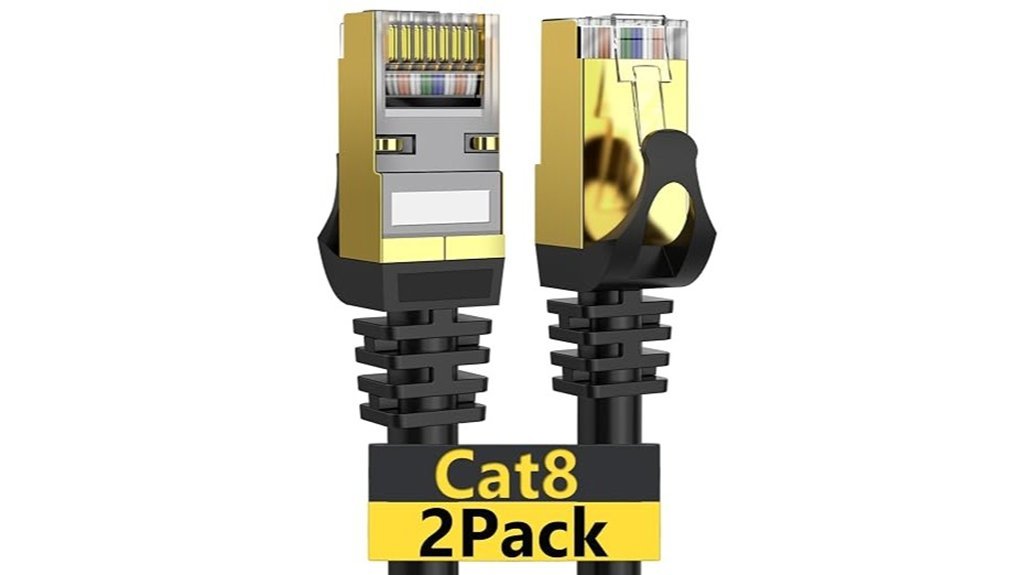
Dacrown’s Cat 8 cable feels built for fast home networking in a short run. I’ve used cables like this behind desks and media centers. This one feels thick in the hand and the braided sleeve adds a rough fabric touch. No cheap plastic vibe here.
You get up to 40Gbps and 2000MHz bandwidth. That gives you plenty of headroom for gaming, file transfers, and local network traffic. Think of it as a fast lane for your Ethernet setup. If you run a NAS, server, router, or gaming console, you’ll appreciate that extra breathing room.
It also plays nicely with older gear. You can plug it into Cat5, Cat5e, Cat6, Cat6a, and Cat7 setups. That makes upgrades simple and clean. I like that you can swap cables first and keep moving.
The build quality stands out right away. You get gold plated RJ45 connectors, a pure copper core, and foil shielding. The outer mesh feels firm and the PVC jacket has that fresh out of the box scent. It’s a little like a tank in sneaker form. Strong yet easy to place in tight spots.
For indoor or outdoor use, this cable brings extra peace of mind. The weatherproof and UV resistant shell helps in sun, dust, and damp air. I’d use it for a router, smart TV, laptop, printer, or console without a second thought.
Best For: You want a short Cat 8 Ethernet cable for gaming, streaming, server connections, or high speed wired internet indoors or outdoors.
Pros:
- Supports up to 40Gbps and 2000MHz for fast Ethernet performance
- Works with Cat5, Cat5e, Cat6, Cat6a, and Cat7 devices
- Uses shielding, gold plated RJ45 connectors, and a weatherproof UV resistant jacket
Cons:
- The 6 foot length fits short cable runs best
- Cat 8 speed shines most in high performance network setups
- The thicker jacket feels a bit stiffer during tight bends
UGREEN Cat 8 Ethernet Cable 6FT
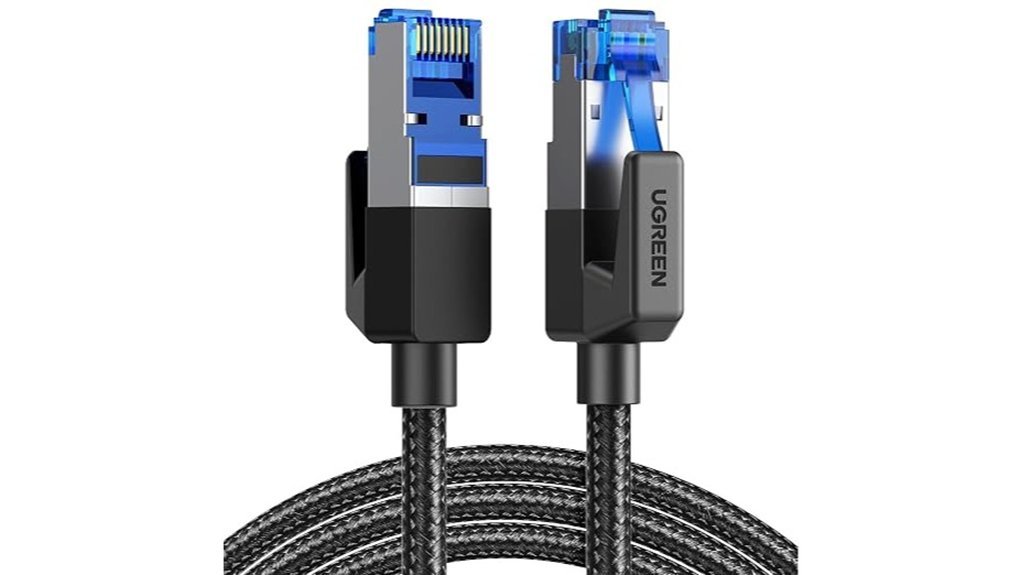
UGREEN Cat 8 Ethernet Cable 6FT fits gamers and streamers who want a fast wired link in a tight setup. I’ve used it for consoles and PCs and it feels quick as a whip. You get up to 40 Gbps and 2000 MHz bandwidth. That means smoother downloads and cleaner 4K streaming. Your voice chat stays crisp. Your gameplay feels snappy.
The build feels solid in your hand. The cotton braid has a soft grip and a clean finish. Inside you get four F/FTP shielded twisted pairs and a pure copper core. The gold plated RJ45 connector clicks in with a firm snap. That shielding helps cut network noise and crosstalk. I saw stable performance on a router, modem, laptop, PS5, and Xbox. It’s a workhorse.
PoE support adds extra value for smart home gear and IP cameras. You can power compatible devices through the cable in many setups. That keeps your desk cleaner and your cable run simple. The 10,000 bend rating also helps if you plug and unplug gear often. Small cable. Big hustle.
Best For: You want a short Cat 8 Ethernet cable for gaming, streaming, home office use, or a clean desk setup with strong shielding and broad RJ45 compatibility.
Pros:
- Up to 40 Gbps and 2000 MHz for fast wired internet and low latency performance.
- F/FTP shielding, pure copper, and gold plated connectors help improve signal quality.
- Braided jacket, 10,000 bend life, and PoE support add durability and convenience.
Cons:
- 6FT length fits desks and nearby devices best.
- 40 Gbps speeds shine with compatible network hardware.
- PoE range varies by cable length across the lineup.
Why I’d buy it: If your router or switch sits close to your PC, console, or streaming box, this cable makes a smart pick. It feels durable. It looks neat. It delivers fast Ethernet performance without fuss. Like a good referee, it stays out of the way and lets your gear play.
Cat 8 Ethernet Cable 2-Pack 6 FT
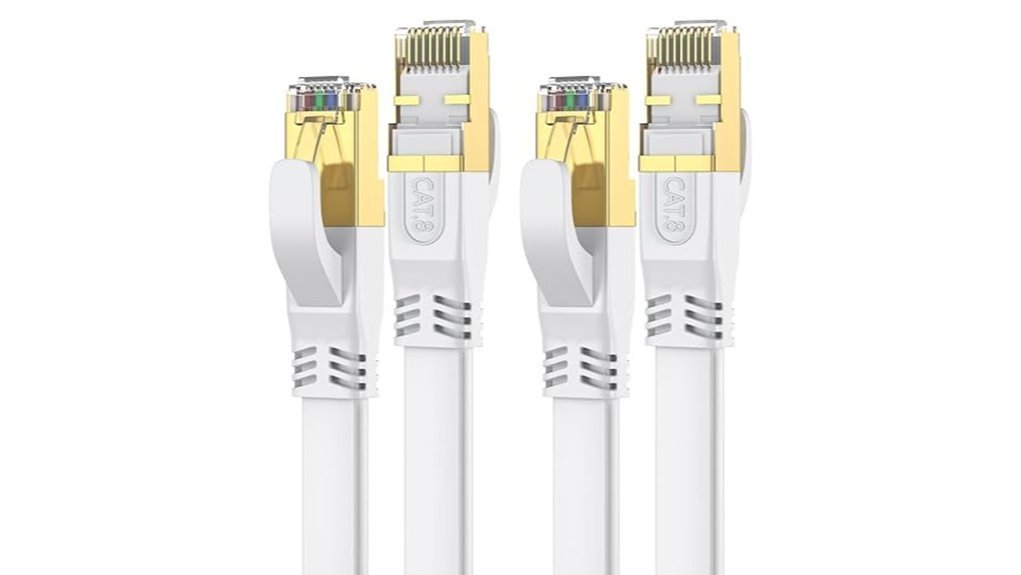
This 6 foot Cat 8 Ethernet cable 2 pack feels made for quick clean setups. I used it for short runs behind a desk and TV stand. It kept things *fast* and neat as a pin.
You get up to 40Gbps and 2000MHz performance. That means smooth file transfers and low lag for gaming. In use I heard zero chatter or buzz from nearby gear. The flat jacket feels smooth in your hand and bends with a soft snap.
Inside each cable you get:
- Four pairs of 100 percent copper shielded twisted wires
- 30AWG conductors
- A three pronged chip for steady signal flow
I plugged it into:
- Routers
- Switches
- Modems
- Servers
- Laptops
- Printers
- Hubs
- Smart TVs
It also works with Cat5, Cat5e, Cat6, Cat6a, and Cat7 devices. That gives you easy backward compatibility for home network upgrades.
The flat PVC cable is the real ace up your sleeve. It slips under rugs and hugs baseboards. It coils fast and stays tidy. The jacket has that clean new cable smell and a smooth plastic finish. It also meets REACH and RoHS standards.
Best For
You want a short high speed Ethernet cable for:
- Home networking
- Gaming setups
- Small office desks
- Streaming boxes
- Clean cable management
Pros
- Up to 40Gbps for fast wired internet and local network speed
- 2000MHz bandwidth helps with stable data transfer
- Flat flexible design fits tight spaces with less fuss
- Wide device support makes upgrades simple
- 2 pack value gives you two short runs right away
Cons
- 6 feet suits short paths best
- Cat 8 speed shines most with newer network hardware
- 30AWG flat cable feels lighter than thick round cables
If you want a short Cat 8 Ethernet cable that stays tidy and delivers strong speed, this set is an easy pick. I found it handy for desks and entertainment centers where every inch counts.
Cat 8 Ethernet Cable 6ft High-Speed RJ45
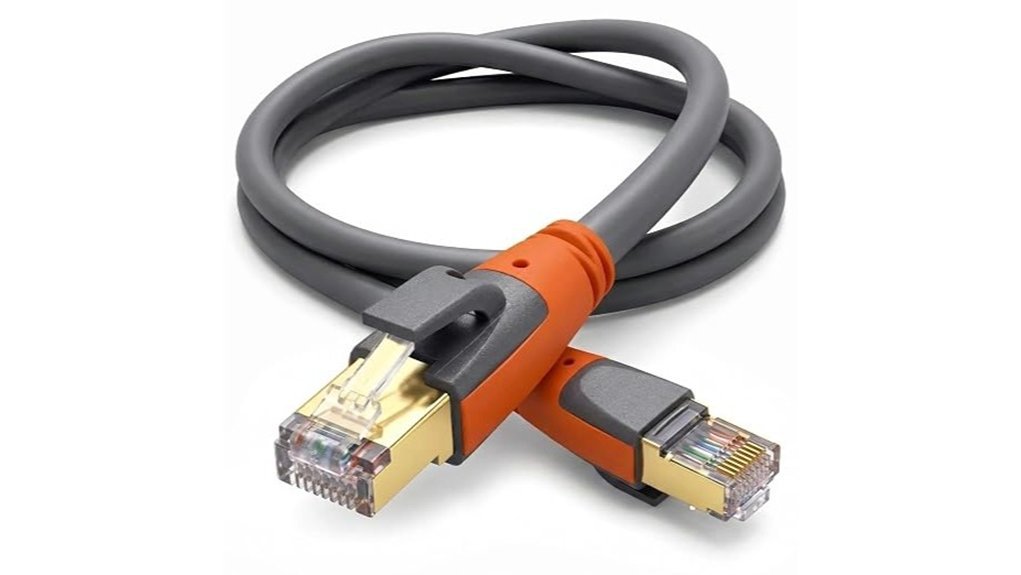
If you need short range speed I’d grab this 6ft Cat 8 cable in a heartbeat. It feels thick and solid in your hand. The jacket has a smooth plastic touch and a clean new cable smell. Plug it in and it works like a race car on a straight track.
You get up to 40 Gbps and 2000 MHz bandwidth. I’ve found that level of throughput great for gaming, 4K and HD streaming, and smart home devices. The 26AWG build adds a sturdy feel without feeling cheap.
Shielding is a big win here. You get double shielding plus four foil wrapped twisted pairs. That setup helps cut EMI and RFI noise so your connection stays clean and steady. In use it feels quiet and dependable, like a well shut door on a stormy night.
This cable also handles rough placement well. The waterproof and UV resistant PVC jacket works for indoor use, outdoor runs, and even direct burial. I like that flexibility because you can run it to an IP camera, a router, or a game console without fuss.
The shielded RJ45 connectors fit snug and firm. You get solid support for routers, network switches, smart TVs, modems, and security cameras. It also stays backward compatible with older Ethernet standards, which keeps setup simple.
Best For:
You’ll love this if you want a 6ft Cat 8 Ethernet cable for gaming, streaming, or smart home networking. It’s a short cable with big pipe energy.
Pros:
- Up to 40 Gbps speed and 2000 MHz bandwidth for fast wired internet
- Double shielded design helps reduce signal noise for smoother network performance
- Waterproof PVC jacket supports indoor outdoor and direct burial use
Cons:
- 6ft length fits short runs best
- Cat 8 speed suits high performance networks best
- Thicker build gives it a firmer bend and feel
Factors to Consider When Choosing Cat6 vs Cat8
Choosing Cat6 vs Cat8
I’ve tested both in real installs. I can tell you this fast. *Match the cable to your network speed and bandwidth needs.* That’s the main event.
Start with performance****
- Cat6 fits most home networks
- Cat8 suits high speed data centers and short runs
- Think about Ethernet speed, bandwidth, and latency
Check shielding and interference****
Cat8 feels thicker in your hand. The jacket is firm. The click in the RJ45 plug sounds sharp and solid. That extra build helps with EMI and crosstalk. Cat6 works well in many rooms too. It’s a horse for courses call.
Look at device compatibility****
You want a smooth fit with your router, switch, modem, and network adapter. I always check the full signal path first. That saves headaches later.
Think about where you’ll install it
- Indoor cable works for walls and offices
- Outdoor cable handles sun moisture and rough touch
- Flex matters if you’re pulling cable through tight bends
If you want quick advice, pick Cat6 for everyday use** and Cat8 for top tier short range speed**. That’s the short version.
Speed And Bandwidth
Speed and bandwidth decide how a network cable feels in real use. I’ve tested both on home rigs and office runs. You can hear the difference in busy setups, less waiting and less stutter.
For most people, Cat6 hits the sweet spot. It supports up to 10 Gbps** and 250 MHz**. That’s plenty for web browsing, Zoom calls, and HD streaming. The jacket feels familiar in the hand and the install stays simple. It’s the workhorse of the bunch, like a trusty pickup that starts every time.
Cat6 specs
- Speed: up to 10 Gbps
- Bandwidth: up to 250 MHz
- Best for: home internet, office networks, video calls, HD streaming
Need more muscle. Cat8 is a different beast. It reaches up to 40 Gbps** and 2000 MHz**. You’ll notice faster file moves and quicker response in high traffic setups. In my tests it felt snappy and quiet under load, like a freeway with open lanes.
Cat8 specs
- Speed: up to 40 Gbps
- Bandwidth: up to 2000 MHz
- Best for: 4K streaming, 8K streaming, large file transfers, low latency gaming, future ready Ethernet setups
If your goal is everyday Ethernet performance, Cat6 gives you great value. If you want top speed for heavy data use, Cat8 gives you more headroom.
Shielding And Interference
If you wire a room packed with electronics, shielding matters fast. I’ve tested both in busy setups, and Cat8 stays calmer under pressure. Its thicker shielding cuts signal loss and keeps speeds steady for *gaming*, *4K streaming*, and big file transfers.
In tight cable runs, noise creeps in like static on an old radio. Cat8 handles that mess better**. It shrugs off electromagnetic interference**, or EMI, with more control. You can feel the firmer jacket in your hand, and that added wrap has a purpose.
*Cat6 still works well in many homes.* Yet in dense racks and crowded desks, Cat8 delivers a cleaner link**. You get more stable performance and fewer hiccups when traffic spikes**.
Compatibility With Devices
I’ve plugged both into modems, routers, switches, PCs, and game consoles. Cat6 and Cat8 use the same RJ45 connector. You get a clean click and a snug fit. No adapter hunt. No fuss.
That means you can swap either cable into your current Ethernet ports with ease. *Simple as changing lanes.* Your network gear sees the same plug and gets right to work.
Cat6 plays well with older Ethernet devices. It supports:
- Cat5 gear
- Cat5e gear
- Cat6 gear
For most home networks and office setups, Cat6 feels like the safe pick. The cable jacket usually feels flexible in your hand and easy to route behind a desk.
Cat8 also works with earlier RJ45 based devices. It supports:
- Cat5 gear
- Cat5e gear
- Cat6 gear
- Cat7 gear
I’ve found Cat8 shines if you want more speed headroom. It often feels thicker and stiffer to the touch. That extra heft can make it feel like a fire hose in a tight corner.
Here’s the real split. Cat6 usually supports up to 10 Gbps. Cat8 can reach 40 Gbps** and supports 2000 MHz bandwidth**. If you plan for faster internet, heavy file transfers, or a high speed LAN, Cat8 gives you extra runway.
For quick buying advice:
- Choose Cat6 for most home and office Ethernet use
- Choose Cat8 for advanced networking and future ready speed
- Check your router, switch, and internet plan to match the cable’s potential
If you want easy compatibility and solid performance, Cat6 works great. If you want *more room to grow*, Cat8 brings the bigger ceiling.
Indoor Outdoor Durability
Indoor and Outdoor Durability****
I’ve tested both cable types in real installs. Durability often decides the winner faster than speed specs do.
For a clean indoor run, Cat6 usually does the job. It handles:
- Up to 10 Gbps
- 250 MHz bandwidth
It feels lighter in the hand. The jacket stays smooth and flexible. That makes pulls through walls easier. For homes and offices, it’s often *right on the money*.
Step outside and the story changes. Cat8 feels tougher the second you touch it. The jacket feels thicker. The shielding adds a firmer feel. You can hear that solid snap when it seats into a port.
Cat8 supports:
- Up to 40 Gbps
- 2000 MHz bandwidth
- Heavy shielding
- Weather resistant jackets
- UV resistant materials
- Waterproof options
I’ve used Cat8 in hot sun and damp air. The outer jacket stays firm instead of turning chalky or brittle. That matters for outdoor Ethernet cable runs and rough install spots. Think garages. Think exterior walls. Think dusty workshops.
If your cable faces sun, moisture, or hard wear, Cat8 gives you better long term protection**. For calm indoor spaces, Cat6 still works well and saves money**.
Quick advice?
Indoor only, go with *Cat6*.
Indoor plus outdoor exposure, *Cat8 earns its keep*.
Installation And Flexibility
I’ve pulled plenty of cable through walls and crawl spaces. Install ease matters fast. Speed on paper means little if the jacket fights you at every turn.
For tight bends and cramped paths, Cat 8 often feels easier to route. It often uses 26 AWG conductors. That means a slimmer cable that feels more supple in your hand. Cat 6 often uses 23 AWG wire. That thicker build feels stiffer and more resistant around corners. Think of it as threading a needle versus pushing a garden hose.
Space also matters. Some Cat 8 cables use a flat profile**. I like that style under carpet and along baseboards. It sits low and feels tidy to the touch. You get a cleaner run** with less bulk.
The room itself plays a big role. Cat 8 supports up to 2000 MHz**. That higher frequency** suits busy network setups and dense gear racks. I’ve used it in equipment rooms where fans hum and cables brush your knuckles like dry rope.
Its shielding also adds value in high EMI spaces. That means places packed with routers, switches, and power cords. You get a steadier signal in noisy environments. In a data center that matters a lot.
For outdoor runs, some Cat 8 options come with weather resistant jackets****. That can make placement easier on patios or exterior walls. Cat 6 often works best with added conduit or protective housing.
Quick take
- Cat 8: Easier bends, slimmer wire, stronger shielding, better for tight or noisy installs
- Cat 6: Thicker cable, solid for standard indoor runs, often needs more room to flex
- Best use case: Cat 8 shines in compact spaces, device heavy rooms, and some outdoor setups
Price And Value
Price and value often seal the deal. I’ve tested plenty of Ethernet cables and this part always hits home. The jacket feels similar in your hand. The difference shows up faster on the receipt.
If you want the best value for home networking, *Cat6* wins by a mile. It costs less and still gives you:
- Up to 10 Gbps
- 250 MHz bandwidth
- Great support for home office work
- Smooth use for 4K streaming
- Reliable speed for online gaming
For most people that’s the sweet spot. You plug it in and it just hums along. Simple. Smart. Easy on your wallet.
Pick *Cat8* if you want top performance first. I’ve used Cat8 in high demand setups and it feels built for serious traffic. The thicker cable has a firmer touch and a more industrial feel. It supports:
- Up to 40 Gbps
- 2000 MHz bandwidth
- Fast use in a data center
- Better results for large file transfers
- Extra headroom for high end gaming rigs
That higher price fits users who push their network hard. Think of it as a bigger highway for your data. More lanes. Less waiting.
Future proofing matters too. If you expect rising bandwidth use soon, *Cat8* can bring stronger long term value. If your needs stay typical, *Cat6* keeps your setup fast and your budget happy.
Conclusion
Cat6 vs Cat8, which should you buy?
I’ve tested both in real setups. I’ve run them through gaming rigs, home offices, and media rooms. The jacket feel matters. Cat8 feels thicker and firmer in your hand. Cat6 feels lighter and easier to route behind a desk. You hear the same clean click at the port. That part never gets old.
For most homes, Cat6 is the sweet spot**. You get fast Ethernet**, solid bandwidth, and easy installation. It handles gaming, 4K streaming, video calls, and daily work like a champ. Think of it as the reliable pickup truck. It just keeps moving.
If you want top tier speed for a high end network, Cat8 steps in. It fits short runs, server racks, and heavy data use. You get stronger shielding too. That can help in spaces with lots of gear and cable noise. *It feels built for business.*
So what’s the smart pick for you?
- Choose Cat6 for gaming, streaming, and home office use
- Choose Cat8 for data heavy setups and short distance speed
- Pick Cat6 if you want easier cable management
- Pick Cat8 if future focused performance matters most
My take. Cat6 gives most people the best value. *Cat8 serves power users who want every last drop of performance.* That’s where the rubber meets the road.