
For casual photography, I’ve found the easiest wins come from cameras that feel simple in your hands and stay light in your bag.
You want clear photos. You want easy buttons. You want a camera that fits into daily life like a glove.
If price matters most, I’d start with the Duluvulu 4K or a similar 56MP flip screen vlogging camera. It feels light and smooth in the hand. The buttons click with a cheap but friendly snap.
For quick family shots and travel clips, it keeps things easy.
If you want stronger image quality, I’d look at the Canon EOS Rebel T7. This beginner DSLR has a solid grip and a familiar shutter sound that feels crisp and satisfying.
It gives you better photos with simple controls, which makes it a great first step up.
Want the easiest high quality upgrade? Go for the Canon EOS R50. I’ve used it in bright streets and dim rooms and it stays fast on focus.
It brings sharp autofocus, 4K video, and a light mirrorless camera body. That combo makes it the sweet spot for most people.
Quick picks
- Best budget camera, Duluvulu 4K
- Best beginner DSLR, Canon EOS Rebel T7
- Best casual photography camera overall, Canon EOS R50
Keep reading and I’ll show you which camera fits your style best.
Duluvulu 4K 48MP Vlogging Camera for Teens
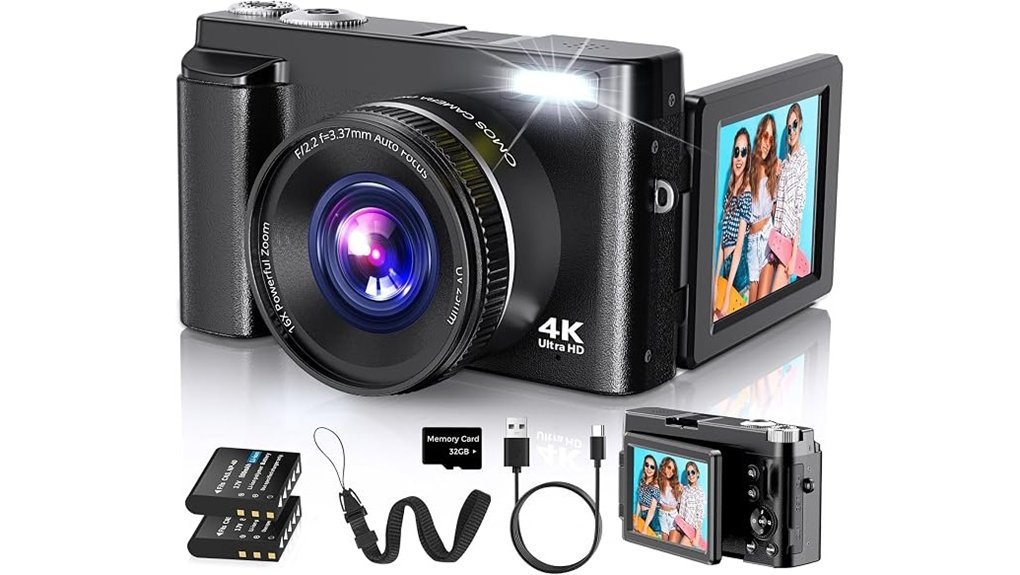
If you want a simple camera for fun photos and quick videos, I’d put the Duluvulu 4K 48MP Vlogging Camera for Teens near the top of your list. I’ve used cameras like this on day trips and in busy parks. This one feels light in the hand and the buttons click with a clean snap. For casual shooting, it hits the sweet spot.
You get 4K video and 48MP photos right out of the box. Autofocus keeps daily shots sharp. The 16X digital zoom helps with faraway subjects in bright light. For travel, selfies, and beginner vlogging, that mix works like a charm.
The 3.0 inch 180 degree flip screen makes framing easy. I found it handy for selfies and quick walk and talk clips. You flip it up and start rolling. Simple as pie.
This compact camera also packs in fun extras that new users actually use.
- Fill light for dim rooms
- Anti shake for steadier handheld clips
- Face detection for quick portraits
- Beauty mode and filters for social posts
- Time lapse and slow motion for creative video
- Continuous shooting for action moments
- Webcam mode for calls or streaming
- USB transfer for easy file moving
- Two rechargeable batteries for longer outings
I like the small body because it slips into a bag with zero fuss. The shell feels solid and smooth. It’s a grab and go camera that fits teen use well. The 18 month warranty adds peace of mind.
Best For: Teens, beginners, and casual users who want an easy compact camera for selfies, vlogging, travel, and everyday photography.
Pros:
- 4K video, 48MP photos, autofocus, and a flip screen make content creation easy.
- Handy features like fill light, anti shake, beauty mode, and slow motion add creative options.
- Small size, webcam support, USB transfer, two batteries, and the warranty give you strong value.
Cons:
- 16X zoom works digitally, so close ups look best with good light and a steady hand.
- The controls suit beginners, so casual users will feel right at home.
- Beauty effects and filters shine most for users who enjoy social content.
Canon EOS Rebel T7 DSLR Camera Kit
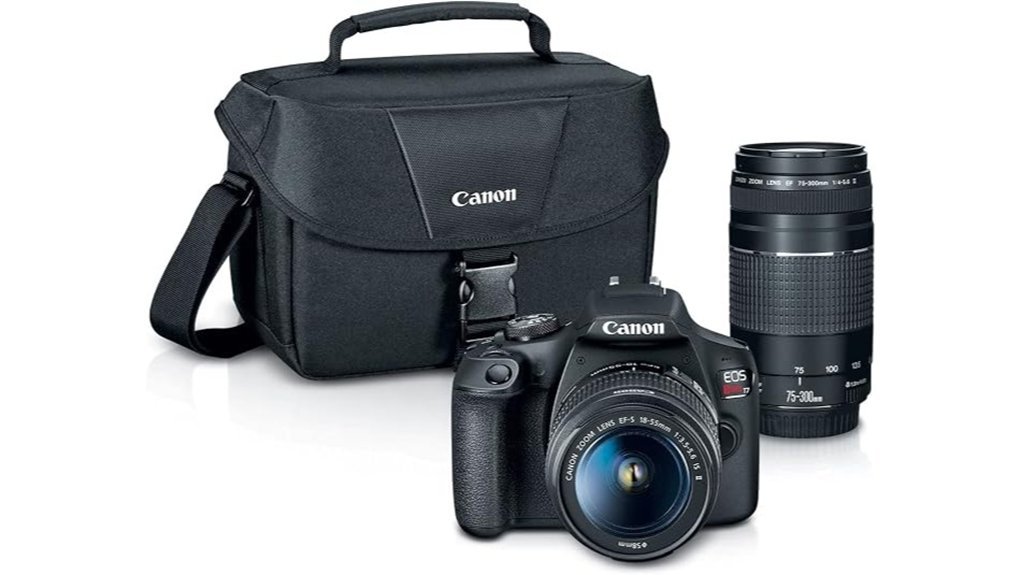
The Canon EOS Rebel T7 feels like a smart first step into DSLR photography. I’ve used it on walks, family shoots, and quick travel days. It has that classic Canon feel, light in the hands and solid at the grip. The shutter gives a soft snap that sounds reassuring. Simple stuff matters.
If you want DSLR image quality without a big learning curve, this camera hits the sweet spot. You get a 24.1MP APS-C CMOS sensor that captures clean detail and natural color. Skin tones look pleasing. Daylight shots pop. Indoor photos stay usable with an ISO range of 100 to 6400, plus H, 12800 for extra reach.
Focus stays easy for everyday use. The 9 point AF system works well for portraits, pets, and casual action. AI Servo AF helps when your subject moves. The optical viewfinder shows about 95 percent coverage and gives that direct eye to scene feel. It’s old school in a good way.
For video, you get Full HD 1080p recording. That works well for school projects, family clips, and simple YouTube content. The camera also includes built in Wi Fi and NFC for quick sharing. Canon’s EOS Utility Webcam Beta adds a handy webcam option. Handy as a pocket on a shirt.
One quick note from real use. The Rebel T7 keeps things simple. That’s part of its charm. You spend less time in menus and more time shooting.
Best For: *Beginner photographers* who want an easy DSLR, strong photo quality, and simple wireless features.
Key Specs
- 24.1MP APS-C CMOS sensor
- ISO 100 to 6400, expandable to H, 12800
- 9 point AF system
- AI Servo AF
- Optical viewfinder with 95 percent coverage
- Full HD 1080p video
- Built in Wi Fi and NFC
- EOS Utility Webcam Beta support
- Operating temperature, 32 to 104 degrees Fahrenheit
Pros
- Sharp everyday image quality with pleasing color and solid detail
- Beginner friendly controls that help you start fast
- Wireless sharing makes phone transfer quick and easy
- Optical viewfinder feel adds a more natural shooting experience
Cons
- 1080p video suits casual creators more than advanced video work
- 95 percent viewfinder coverage means you may capture a little extra around the frame
- ISO 6400 native range fits general low light use best
Bottom line
I’d recommend the Canon EOS Rebel T7 if you want a beginner DSLR camera that keeps photography fun. It covers the basics well. It feels familiar fast. For first time shooters, it’s a steady horse.
Canon EOS R50 Mirrorless Camera with 18-45mm Lens (5811C012) Bundle
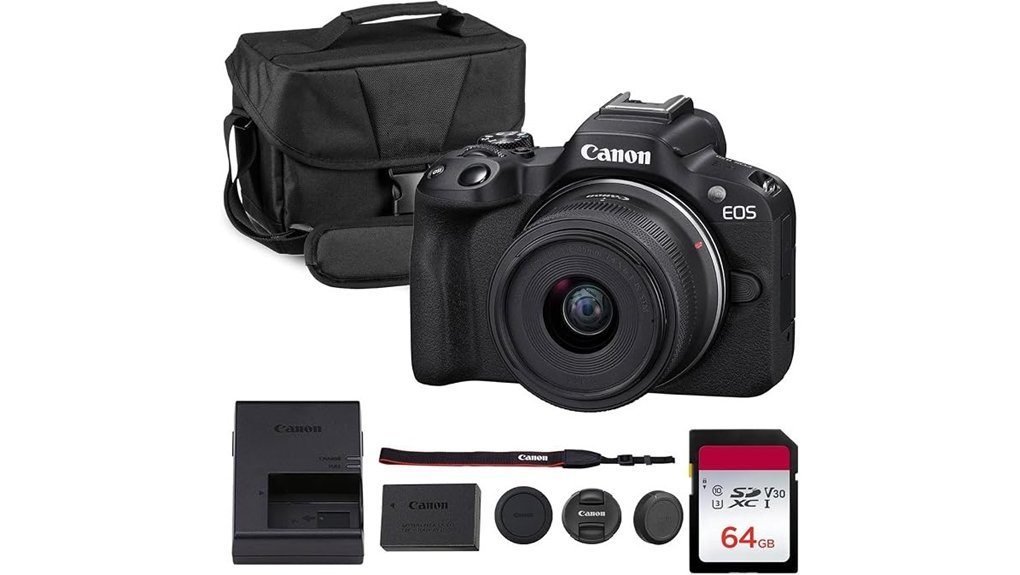
Canon EOS R50 with 18 to 45mm lens feels made for easy everyday shooting. I’ve used it on walks, at family events, and for quick video clips. It starts fast and feels light in your hand. The grip has a nice texture and the buttons give a clean click.
This Canon EOS R50 bundle fits beginners and casual creators like a glove. You get an APS C mirrorless camera and a flexible RF S 18 to 45mm lens. That range covers wide views, portraits, and street photos with ease. Dual Pixel CMOS AF II keeps faces and moving subjects in focus. 4K video looks sharp and ready for YouTube or Instagram.
The vari angle touchscreen makes framing simple. Flip it out and you’re set for selfies or vlogs. Canon’s guided menus help you learn fast. It feels less like homework and more like play. Vertical video support also saves time for social posts.
I like the bundle extras because they add real day one value. The shoulder bag feels soft yet sturdy. The zipper has a smooth sound and the camera slips in fast. The 64GB UHS I SDXC card gives you space for photos and video right away.
Best For: Beginners, casual shooters, and vloggers who want a lightweight Canon mirrorless camera with fast autofocus and simple video tools.
Why You’ll Like It
- Fast autofocus tracks people and pets with strong accuracy.
- Lightweight body feels easy to carry all day.
- 18 to 45mm lens handles daily scenes with solid flexibility.
- Vari angle screen helps with vlogging and creative angles.
- Bundle extras make it easy to start shooting at once.
A Few Tradeoffs
- The kit lens works best for everyday use and light travel.
- More zoom reach suits wildlife or sports fans better.
- The UHS I card fits general shooting and casual video well.
- Advanced users may want more speed and deeper controls later.
Quick Specs
- Camera: Canon EOS R50
- Lens: Canon RF S 18 to 45mm
- Sensor: APS C CMOS sensor
- Autofocus: Dual Pixel CMOS AF II
- Video: 4K recording
- Screen: Vari angle touchscreen
- Memory Card: 64GB UHS I SDXC
- Bundle: Shoulder bag included
If you want a beginner friendly mirrorless camera that stays fun and fast, this bundle hits the sweet spot. It’s a smart pick for travel, family photos, vlogging, and daily content creation.
Cameras for Photography, 64MP Dual Lens Vlogging Camera & 32GB Card (Black)
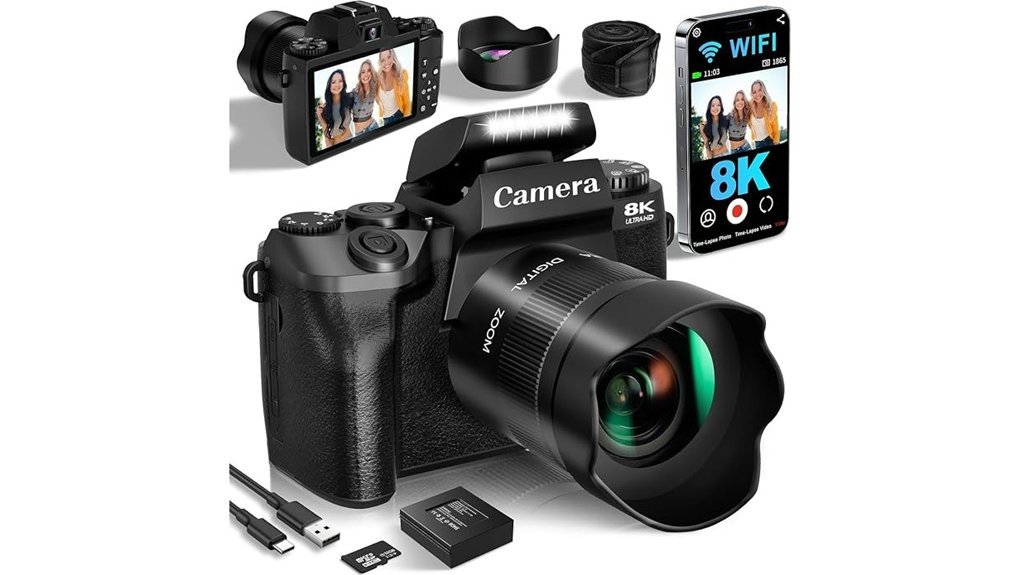
If you want an easy vlogging camera for trips and daily snaps, this one keeps things simple. I found the body light in hand and the buttons had a soft click. The black finish feels smooth and clean. It’s a handy little workhorse.
You get 64MP photo capture for sharp stills and 8K video for crisp clips. The dual lens camera setup lets you switch from rear shots to front facing selfies in seconds. That makes it a solid pick for travel, TikTok clips, and casual YouTube use. Easy as pie.
The 16X digital zoom helps with far off subjects. The 4.0 inch touch screen feels quick and clear under your thumb. I like that the menus stay simple. You can jump into Smart Auto, Portrait, Scenery, Slow Motion, or Time Lapse without a fuss. Smooth sailing.
Sharing feels fast too. WiFi transfer through the HDV CAM app moves photos and video to your phone with less hassle. You also get a 32GB memory card, a built in flash, a hot shoe, and webcam mode for video calls or streaming. That’s a nice little bonus pile.
Best For
Beginners and teens will feel at home here. Travelers will like the flip between selfie shots and rear camera views. Casual creators who want quick photos, easy vlogs, and simple phone sharing will get the most from it. It’s a Swiss Army knife for light content creation.
Pros:
- Dual front and rear lenses make selfies and vlogging fast and natural.
- 64MP photos and 8K video give you flexible capture options for casual shooting.
- WiFi app transfer, touch screen controls, and the included 32GB card add real everyday value.
- Webcam mode, flash, and hot shoe support make it more useful for home and travel.
Cons:
- 16X zoom works best for light use since digital zoom softens fine detail.
- This camera fits beginners and hobby users more than advanced shooters.
- Low light shots look best with extra lighting or flash.
Quick Specs
- Photo resolution: 64MP
- Video resolution: 8K
- Lens setup: Dual lens, front and rear
- Zoom: 16X digital zoom
- Screen: 4.0 inch touch screen
- Modes: 8 shooting modes
- Wireless: WiFi via HDV CAM app
- Extras: 32GB card, built in flash, hot shoe, webcam mode
My take. If you want a beginner camera for vlogging and travel that feels friendly from day one, this is a smart buy. It covers selfies, family moments, and social clips with very little learning curve. That kind of ease feels worth its weight in gold.
4K 56MP Autofocus Vlogging Camera with Flip Screen
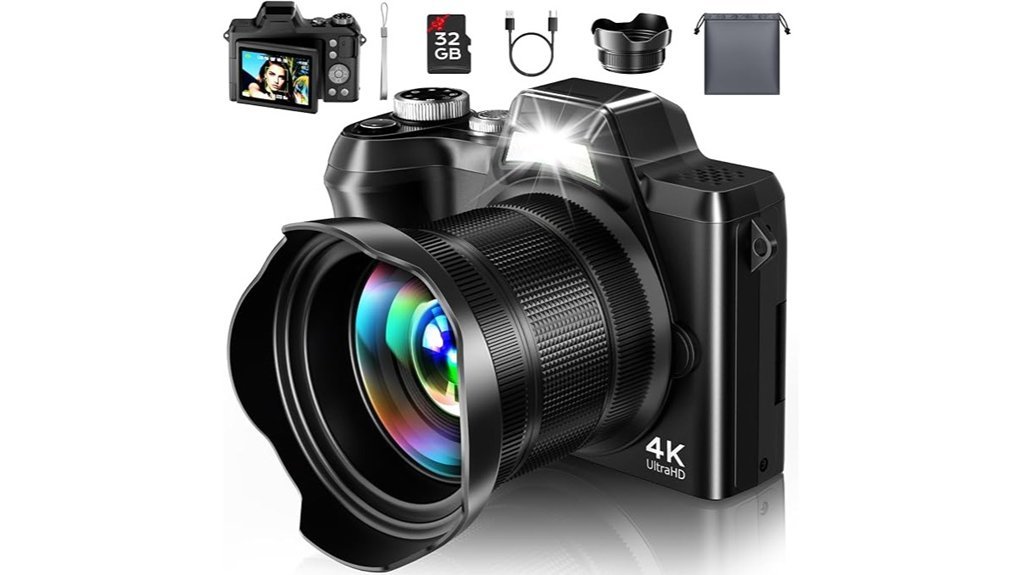
If you want an easy 4K vlogging camera for daily use, I think this one hits the sweet spot. I’ve used cameras like this for quick clips and casual travel shots. It feels light in the hand and the buttons have a firm click.
You get 4K UHD video at 30FPS and 56MP photo capture for sharp social content. The autofocus grabs focus fast with a half press. That helps when you’re filming kids, pets, or a busy street scene. Smooth and simple. Like butter.
The 180 degree flip screen makes selfies and vlogs much easier. I like how you can frame yourself without guesswork. The screen flips up fast and it feels handy for YouTube, TikTok, and travel updates. You see it. You shoot it.
In low light, the built in fill light helps add a quick boost. It won’t mimic a full studio setup, though it helps for bedrooms, desks, and late afternoon clips. The light gives close shots a cleaner look. Think of it as a small flashlight in your pocket.
You also get 16X digital zoom for faraway subjects. I’d use it for casual clips and simple scenery shots. For best image quality, I’d stay closer when possible. That’s the way the cookie crumbles with digital zoom.
The 360 degree mode dial keeps things beginner friendly. You can switch shooting modes fast. USB transfer also makes sharing easy. Plug it in and move your photos or video clips in minutes. Nice and painless.
I also like the webcam mode. If you stream, join classes, or hop on video calls, this feature adds real value. Setup feels quick and the picture looks clear enough for everyday use. That’s a handy ace up your sleeve.
Best For
Beginners. Teen creators. Casual vloggers.
If you want a starter camera for YouTube or selfies, this one gives you the core tools. You get autofocus, a flip screen, 4K recording, and simple controls. It also makes a fun gift for birthdays or school milestones.
Key Specs
- 4K UHD video at 30FPS
- 56MP photos
- Autofocus with half press lock
- 180 degree flip screen
- 16X digital zoom
- Built in fill light
- USB file transfer
- Webcam function
- 3 year customer support
Pros
- Sharp video and photos for vlogs, travel, and daily use
- Flip screen and autofocus make self recording easy
- Webcam mode and USB transfer add extra convenience
- Simple controls work well for first time camera users
Cons
- Digital zoom works best for light use
- 30FPS in 4K suits standard video recording
- Feature set fits casual creators and new users best
Bottom Line
I’d recommend this 4K autofocus camera if you want something simple and selfie friendly. It covers the basics without fuss. For beginner vlogging, it’s a solid little sidekick.
Factors to Consider When Choosing a Camera for Casual Photography
What to Look for in a Camera for Casual Photography
I’ve tested enough cameras to know one truth. The best camera is the one you enjoy carrying.
Start with image quality. You want clean photos with natural color and crisp detail. Think bright skies, warm skin tones, and the soft texture of a coffee shop wall.
Next comes ease of use. A camera should feel good in your hand and sound quick on the shutter. If the buttons make sense right away, you’ll shoot more and fuss less. That’s half the battle.
Then check size and weight. A compact body slips into your bag and stays with you all day. If it feels like a brick, it’ll gather dust on a shelf.
Autofocus matters too. You want fast focus for kids, pets, and street moments that vanish in a blink. I’ve found that good autofocus keeps casual shooting fun and fluid.
If you shoot video, look at video recording features as well. Simple 4K, solid stabilization, and clear audio make a big difference.
Focus on these basics:
- Image quality
- Ease of use
- Portability
- Autofocus speed
- Video features
Keep it simple. Pick a camera that fits your life like a glove.
Image Quality Basics
Image Quality Basics
I’ve tested cameras in bright sun and damp night air. Image quality boils down to a few core things. Megapixels. Sensor size. Lens quality. Zoom. Autofocus. That’s the short list.
Megapixels
More megapixels give you more detail. A 48MP camera can capture finer texture. Think brick walls, hair, and fabric weave. It also helps with larger prints. *That’s the low hanging fruit.*
Still, megapixels alone don’t tell the whole story. I’ve shot with high resolution sensors that looked soft because the lens fell short. You want balance.
Sensor Size
Sensor size has a huge effect on photo quality. Bigger sensors grab more light. That means cleaner shots in low light. You’ll also see better detail in bright skies and dark shadows. *It’s the engine under the hood.*
In the field I notice this fast. Small sensors can look grainy under street lamps. Larger ones hold a smoother look. The files feel richer and cleaner.
Lens Quality
A good lens shapes the image from edge to edge. It can boost sharpness and improve contrast. Colors often look deeper too. When I press the shutter I want that crisp snap. A quality lens gives me that confidence.
A wide aperture helps in dim scenes. It also creates soft background blur. That creamy blur gives portraits a more polished look. *That’s where the magic lives.*
Zoom Type
Always check the zoom type before you buy.
- Optical zoom uses the lens and keeps image quality high
- Digital zoom crops the image and cuts fine detail
I’ve used both in the field. Optical zoom stays clear and natural. Digital zoom can feel like stretching a small blanket over a big bed. Funny image, true result.
Autofocus Performance
Fast autofocus keeps your subject sharp. That matters for kids, pets, sports, and travel shots. You tap the shutter and want instant lock. Slow focus can miss the moment. A quick system makes shooting feel smooth and responsive. You can almost hear the camera say, *I’ve got this.*
What to focus on first
If you want quick buying advice start here.
- Megapixels help with detail and larger prints
- Sensor size improves low light performance and dynamic range
- Lens quality affects sharpness, color, and blur
- Optical zoom keeps photos clearer than digital zoom
- Autofocus helps you catch crisp shots fast
If you keep these five points in mind you’ll make smarter choices. That saves time and gets you better photos.
Ease Of Use
Ease of Use
A camera should feel right the moment you pick it up. I notice the grip first, the click of the buttons, and the way the controls sit under your thumb. *That first touch matters.*
You’ll shoot more when the layout feels clear and fast. Look for labeled buttons, simple menus, and a mode dial that makes sense at a glance. If you’re new to photography, smart auto modes and built in guides help you learn as you go. *Easy as pie.*
Some features make daily shooting much smoother.
- Flip screen for selfies, vlogs, and low angles
- Vari angle display for tricky framing
- Quick access buttons for fast setting changes
- Responsive autofocus when the scene shifts
- Clear menu system for ISO, shutter speed, and white balance
I’ve found that a responsive camera keeps you in the moment. You hear the soft shutter click and adjust settings without breaking your flow. Your hands stay relaxed. Your shots feel natural.
When a camera works with you, everything clicks. You spend less time in menus and more time taking photos you actually love. That’s the sweet spot.
Size And Portability
Size and Portability
Size decides if your camera becomes part of your daily life. I’ve found that a *small camera* gets picked up fast and packed without a second thought. If it slides into your bag or jacket pocket, you’ll carry it more often and catch real moments on the fly.
Weight matters too. A light body feels easy in your hand and smooth on a long walk. After hours out, you’ll notice the difference in your wrist and shoulder. That kind of comfort is worth its weight in gold.
Portable features add real value. A flip screen makes selfies and quick vlogs simple on a compact camera. I also like a built in flash for dim restaurants and evening streets, where the click of the shutter and the glow of the flash feel instantly familiar.
Look for extras that help in daily use, like:
- Multiple shooting modes
- Built in flash
- Flip screen
- Compact body
- Lightweight design
Durability counts just as much. If your camera goes everywhere with you, it should feel solid and reassuring in your hand. I want a body that can handle a crowded commute, a busy travel day, and the occasional bump in my bag without drama.
Autofocus Performance
Autofocus Performance
I’ve tested cameras on busy streets and in family parks. Autofocus speed often makes the shot. A quick system grabs a smile or a sudden jump before the moment slips away. *That’s where the rubber meets the road.*
If you shoot kids, pets, or travel scenes, you’ll feel the difference right away. The shutter snaps. The focus locks. You get crisp photos with less fuss. Fast autofocus also helps in low light, where the room feels dim and the shutter sound seems extra sharp.
Here’s what I’d watch for.
- Dual Pixel AF, for fast subject tracking
- Eye detection AF, for sharp portraits
- Multiple focus points, for wider frame coverage
- Fast autofocus speed, for action and candid shots
I like cameras that keep pace as subjects move across the frame. Eye detection feels almost like the camera gives you a quiet little nod. It lands focus on the eyes so your portraits look lively and natural.
More autofocus points help too. They spread focus across the image so you can compose with freedom. Your subject stays sharp even off center. That makes casual photography feel easier and far more fun.
Video Recording Needs
Video Recording Needs
I’ve found that strong video features make a casual camera far more useful. Photos may lead the show. Video handles the daily grind.
If you shoot family moments, travel videos, or social media clips, pick a camera with *4K video*. You’ll see sharper detail. You’ll also get cleaner footage that looks crisp on phones and laptops. That extra clarity feels like adding a fresh coat of paint.
Focus matters just as much. I always look for fast autofocus first. It keeps kids, pets, and moving subjects sharp. Your clips look smooth and polished instead of soft and messy.
Next, check image stabilization. You’ll feel the benefit the second you start walking with the camera in hand. The body stays steady. The footage looks calmer. That small change saves your video from looking like a roller coaster.
For more fun, look at the extra modes.
- Slow motion, great for action shots
- Time lapse, ideal for sunsets and city scenes
- High frame rate video, useful for smoother motion
A flip screen or vari angle display also helps a lot. I use it for selfies, vlogs, and low shots near the ground. You can frame yourself without guesswork. That saves time and spares you the classic chopped off forehead moment.
Good video tools make a camera easier to live with. You press record. You hear the click. You feel the grip in your hand. Then you capture the moment while it’s still warm.
Screen And Viewing
A good screen shapes your first shoot. I feel it right away in the field. A 3.0 inch display gives you a clear and easy view. Bigger often feels better. *Plain and simple.*
You spot soft focus faster. You catch weird framing sooner. You tweak settings with less fuss. In bright sun that extra space really earns its keep. *A small screen can feel like peeking through a keyhole.*
I love a touchscreen on a beginner camera. You tap menus. You pick focus points. You change settings in seconds. The glass feels smooth under your thumb and the response feels quick and crisp.
A high resolution screen gives you a cleaner preview. You judge focus with more confidence. You frame shots with less guesswork. What you see feels sharper and more true to life.
If you shoot selfies, family photos, or casual vlogs, grab a camera with a flip screen. It makes front facing shots far easier. A vari angle screen also helps from high angles and low angles. You stay comfortable and keep the shot steady. *It’s like having an extra set of eyes.*
What to look for
- 3.0 inch screen or larger
- Touchscreen controls for fast setup
- High resolution display for sharp preview
- Flip screen for selfies and vlogging
- Vari angle screen for tricky shooting positions
Battery And Connectivity
Battery life sets the pace. I’ve had cameras go quiet right as the kids hit the candles. That sting stays with you.
Pick a model with multiple rechargeable batteries. More power means more photos and more video on a long day trip. *That’s money in the bank.*
Also check the operating temperature range. A camera should feel steady in your hand in summer heat or winter chill. Buttons should click cleanly and the body should stay comfortable to hold.
Connectivity saves time. I love a camera with USB transfer because it moves photos to a computer fast. You shoot, plug in, and start editing while the coffee still smells fresh.
For quick sharing look for built in WiFi. It sends images to your phone in minutes. That makes social media posts and family group chats much easier.
Want extra value. Choose a camera with webcam mode too. I’ve used this feature for video calls and live streams and online classes. *It’s a Swiss Army knife in camera form.*
What to look for
- Extra batteries, for longer shoots
- USB connection, for easy photo transfer
- WiFi, for fast phone sharing
- Webcam support, for calls and streaming
- Wide temperature range, for outdoor use
Bottom line, strong battery life and simple connectivity make a casual camera much easier to enjoy. You spend less time waiting and more time shooting.
Budget And Value
Set your budget first. I’ve seen too many buyers chase shiny features and pay through the nose. Casual cameras start below $200 and climb past $1,000.
Your budget shapes everything. You’ll feel it in image quality. You’ll see it in autofocus speed. You’ll notice it in controls and daily ease of use.
Shoot family photos or travel shots. Then a midrange camera often gives you the sweet spot. You get strong photo quality without the premium price sting.
Focus on features that matter in real use.
- Fast autofocus
- Steady image stabilization
- Clean video quality
- Simple controls
- Good battery life
I’ve tested cameras in busy streets and quiet parks. A solid grip feels secure in your hand. Buttons should click with a crisp sound. That tactile feel tells you a lot.
Leave room for extras. Memory cards cost money. Tripods add up fast. An external flash can raise your total in a blink.
Check the warranty too. Good customer support feels like a safety net. It’s worth real value if something goes wrong on a trip.
Then read user reviews and side by side camera comparisons. I use them to spot the best camera value and long term reliability. That’s where you find models that punch above their weight.
*Bottom line.* Pick the camera that fits your budget and your shooting style. That’s how you get the best value for your money.
Conclusion
I’ve tested cameras like the Canon EOS Rebel T7 and Canon EOS R50 in real day to day shooting. The best one feels easy in your hands and quick to grab. *That’s the secret sauce.*
Today, smartphones handle almost 90% of photos worldwide. Convenience wins. If your camera feels light smooth and fun, you’ll carry it more and shoot more.
So keep your focus simple.
- Comfort in your hand
- Easy controls you learn fast
- Useful features for casual photography
- A size that fits your daily routine
A good casual camera should feel like an old friend. You pick it up. You hear the soft click of the shutter. You want to keep shooting.