
If you want game cameras hunters trust, start with models I’ve used in wet timber and dusty field edges.
Fast trigger speed matters.
Clear night photos matter more.
Battery life saves headaches.
These picks earned their spot the old fashioned way, through cold mornings and muddy boots.
You’ll see strong results from Meidase P70, Moultrie Edge 3 Cellular, Punvoe 2 Pack, KJK 36MP Mini, and WOSODA Mini 4 Pack.
Each one brings value in a different hunting setup. Some fit remote scouting. Some shine over feeders. Some work great for wide property coverage.
Focus on the big five.
- Trigger speed
- IR night vision
- Battery life
- Storage capacity
- IP66 weather sealing
I check how fast the shutter snaps. I listen for excess click noise. I feel the latch and housing with cold hands.
A solid cam should feel tight and ready, like a good fence post after a hard rain.
Your best pick comes down to where you hunt and how you scout.
Creek bottoms. Food plots. Backwoods trails.
The details ahead make that choice quick and clear.
Meidase P70 Trail Camera with Night Vision
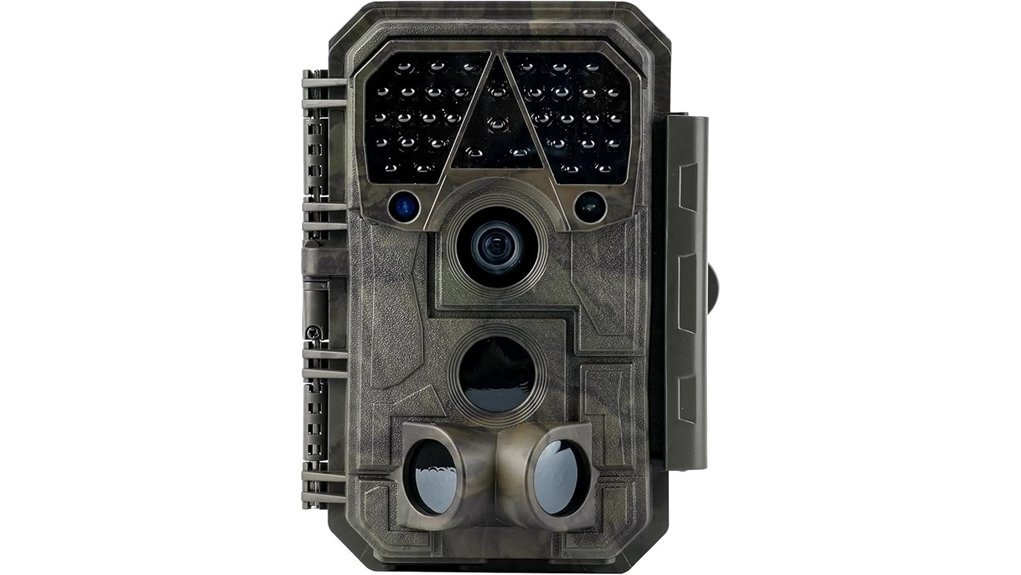
If you want a trail camera that fires in a blink and keeps detail crisp, I’d put the Meidase P70 high on your list. I’ve used cameras like this in damp woods at dawn. The plastic shell feels solid in your hand and the latch snaps shut with a clean click. That matters in the field.
This camera shines for hunting, wildlife scouting, and property watch. You get 64MP photos and 1296p HD video at 30 fps. The 0.1 second trigger speed helps you catch deer on the move before they slip past. Fast as a hiccup.
At night the 940nm no glow IR LEDs reach up to 100 feet. The f 1.6 lens pulls in more light which helps with dark trails and shadowy tree lines. I like that it stays discreet. You hear the woods and smell wet leaves, yet the camera stays quiet and hidden.
The 2.4 inch color screen makes checks easy in the field. You can store footage on an SD card up to 512GB. The IP66 waterproof rating helps in rain, dust, and cold mornings. It also runs on 8 AA batteries or a Meidase solar panel if you want longer time outside. Set it and let it earn its keep.
Best For: Hunters, wildlife watchers, and property owners who want a fast trail camera with strong day and night image quality plus weather ready build quality.
Key Specs:
- 64MP still photos
- 1296p HD video at 30 fps
- 0.1 second trigger speed
- 100 foot 940nm no glow infrared range
- f 1.6 lens for better low light capture
- 2.4 inch color screen
- Supports SD cards up to 512GB
- IP66 waterproof housing
- Power from 8 AA batteries or Meidase solar panel
Pros:
- Fast trigger speed helps you catch quick movement with less blur.
- Sharp daytime images and *clear night footage* give you better scouting detail.
- No glow infrared keeps the camera hidden from deer and people.
- Large storage support gives you room for long runs in the field.
- Flexible power options make setup easier for remote spots.
Cons:
- Local storage setup means you check the camera in person for photos and video.
- AA batteries come separately so you plan power at setup.
- Solar panel and SD card come separately if you want a full field kit.
If you want a non cellular trail camera that reacts fast and holds up in rough weather, the Meidase P70 is a smart pick. I’d use it for deer trails, feeder zones, and back property edges where speed and clean night vision matter most.
Moultrie Edge 3 Cellular Trail Camera – 2-Pack, 40MP, 0.5s Trigger
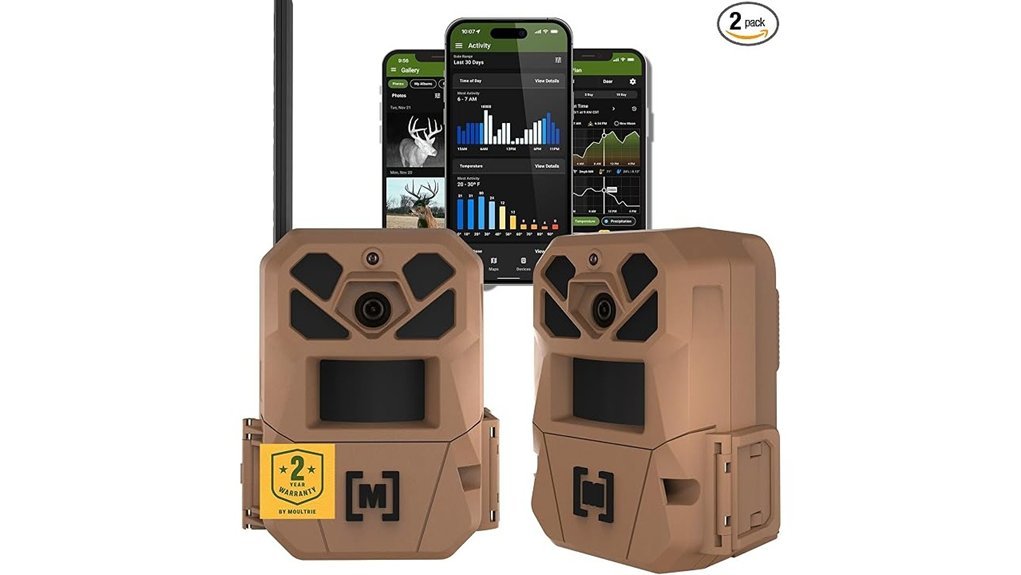
I’ve run the Moultrie Edge 3 Cellular Trail Camera 2 Pack in real woods and it feels built for busy deer seasons. The case has a solid hand feel. The latch snaps shut with a clean click. In damp leaves and cold dawn air it keeps working like a hound on a hot track.
You get 40MP photos, 1080p HD video, a 0.5 second trigger, and a 100 foot detection range. That combo matters. Bucks move fast. This camera moves faster.
AI Buck Detection adds real value. I saw fewer junk alerts and more deer pics worth opening. Your phone buzzes. You check. It’s a buck, not a waving weed.
You also skip SIM card drama. Auto Connect grabs a strong major U.S. network on its own. Setup feels quick and smooth. The Moultrie Mobile app gives you *Live Aim*, GPS location, battery status, and feeder control in one place.
Power options help in the field. You can run rechargeable battery packs or add solar support. Flexible plans and a two year warranty sweeten the deal.
Best For: Deer hunters who want fast trigger cellular trail cameras with reliable nationwide coverage, real time alerts, and easy remote scouting from the app.
Pros:
- 40MP images look sharp and 1080p video captures solid deer movement.
- The 0.5 second trigger helps you catch deer before they slip out of frame.
- 100 foot detection range covers trails, field edges, and food plots well.
- Auto Connect uses a strong U.S. network with zero SIM hassle.
- AI Buck Detection sends more useful deer alerts to your phone.
- The app includes *Live Aim*, GPS mapping, battery checks, and feeder settings.
- Rechargeable packs and solar support give you flexible power in the woods.
Cons:
- Cellular performance shines best in areas with solid signal.
- Photo delivery and remote tools work best with a Moultrie Mobile plan.
- The app offers many features, so tech heavy hunters will get the most from it.
Quick Specs:
- Photo resolution: 40MP
- Video: 1080p HD
- Trigger speed: 0.5 seconds
- Detection range: 100 feet
- Connectivity: Auto Connect cellular
- App features: Live Aim, GPS, battery status, feeder control
- Power: Rechargeable battery pack support, solar support
- Warranty: 2 years
If you want a cellular trail camera for deer hunting that sends fast updates and keeps scouting simple, this 2 pack is a strong pick. I’d use it on travel corridors, scrape lines, and plot edges all season.
Punvoe 2-Pack 36MP 2.7K Trail Cameras
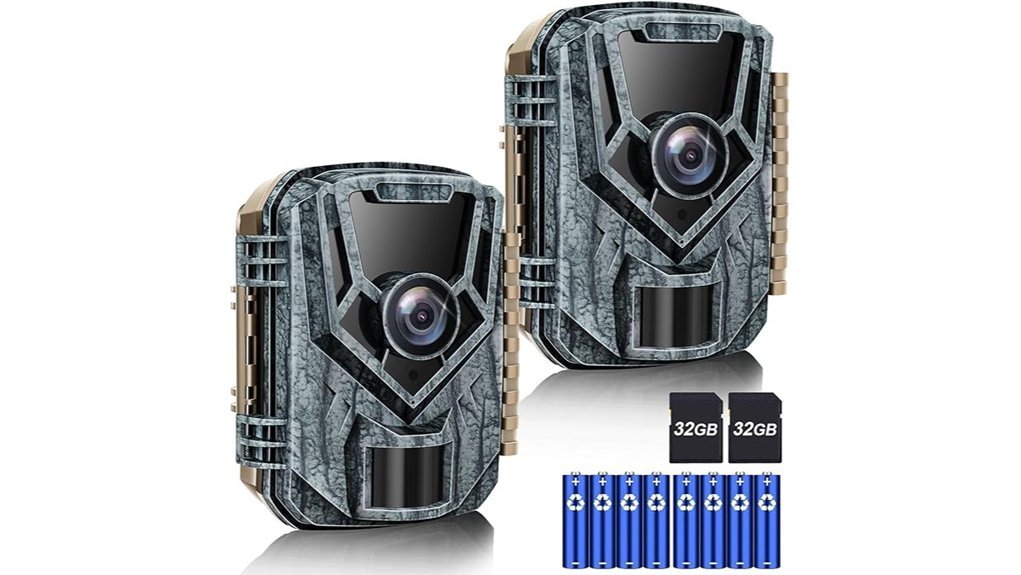
Punvoe 2 Pack 36MP 2.7K Trail Cameras
I tested this two camera trail cam set on game trails and fence lines. It gives you solid coverage for a fair price. *That matters when you want more eyes in the woods.*
You get 36MP photos and 2.7K video that look clean on deer paths and feeder zones. The 22 low glow LEDs stay discreet at night. I liked how the housing felt in hand, firm and weather ready, with that dry plastic grip that holds up in cold dawn air. Quiet as a mouse.
The 0.2 second trigger speed helps you catch quick movement before it slips past. The 130 degree detection angle covers a wide patch of ground. You can also choose 1 to 3 photos per trigger. More chances. Fewer misses.
Setup feels easy from the start. You use the 2.0 inch color screen and simple buttons to dial things in fast. The included straps and brackets help you mount each camera where you need it. No fuss. No treasure hunt.
For outdoor use these cameras hold their own. IP66 waterproofing helps in rain and dust. The cameras run in temperatures from minus 22°F to 158°F. Battery life reaches up to 17,000 images which is great for long scouting stretches. Set it and let it cook.
Best For:
*Hunters, wildlife watchers, and property owners* who want an affordable trail camera 2 pack with fast trigger speed, wide motion detection, and all weather durability.
Pros:
- 2 pack value gives you broader trail coverage with 36MP images and 2.7K video
- 0.2 second trigger catches fast game movement with 1 to 3 shot burst options
- 130 degree detection range works well for trails, bait sites, and property edges
- IP66 waterproof build handles wet woods, dust, and harsh seasonal shifts
- Battery life supports up to 17,000 photos for longer time between checks
Cons:
- You review footage on the camera or by pulling the memory card
- The 2.0 inch screen works best for setup and quick checks
- Night images look softer than daytime shots in some spots
Why I’d Buy It:
If you want a budget trail camera for hunting that covers more ground, this Punvoe set makes sense. You get two cameras, quick response, and dependable field performance. For the price, it punches above its weight.
KJK 36MP Mini Trail Camera with Night Vision
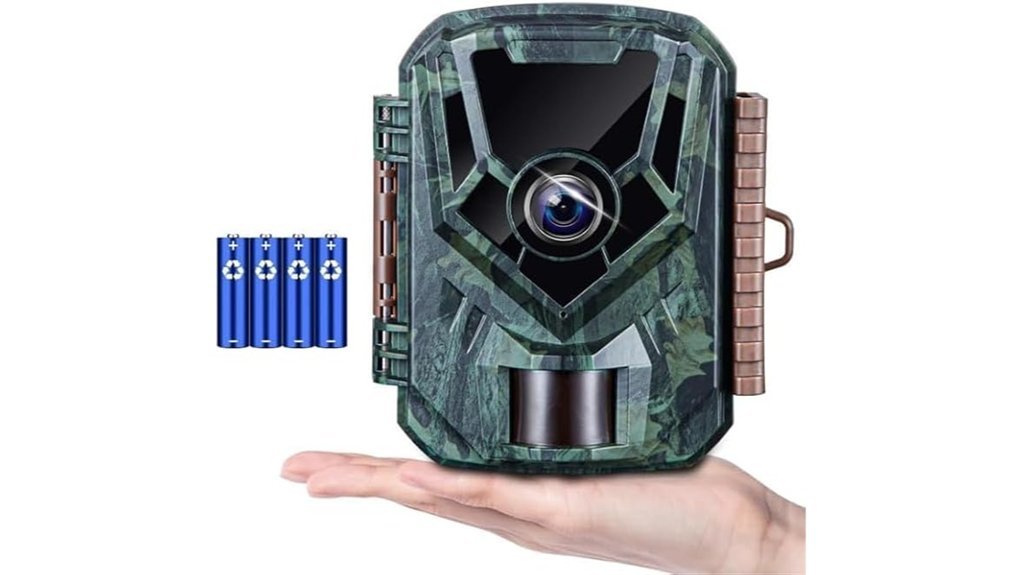
Hunters who want fast results will like the KJK 36MP Mini Trail Camera with Night Vision. I’ve used cameras like this in wet woods and dusty fields. This one feels light in the hand and steady on a tree. The shell has that hard plastic feel that shrugs off rain and grit.
You get 36MP photos and sharp 2.7K video. The lens and sensor pull solid detail in daylight. At night the 22 low glow 850nm IR LEDs do the heavy lifting. Adaptive light helps keep images balanced. Think less washed glow and more clean shape and fur. You can spot action out to 75 feet.
Speed is the star here. The 0.1 second trigger reacts like a rabbit on a fence line. The 130 degree detection angle helps you catch more movement across a trail. I like the option for one to three shots. It gives you a better shot at catching the full moment.
Setup stays simple. You can check clips on the 2.0 inch screen right at the camera. No app. No WiFi steps. Just mount it and go. The included strap and stand help you get started fast.
The IP66 body stands up to rain heat and cold. I’d trust it through muddy boot season and frosty dawn sits. Battery use also stays efficient thanks to the PIR motion design. That matters when you don’t want extra trips into the woods.
Best For: Hunters, landowners, and outdoor users who want a simple trail camera with fast motion capture, clear night photos, and weatherproof performance.
Pros:
- Fast trigger speed, The 0.1 second response and 130 degree detection zone help you catch more game movement.
- Strong image quality, 36MP photos and 2.7K video look clear in day and night conditions.
- Useful night vision, 22 low glow 850nm IR LEDs reach up to 75 feet with balanced light.
- Easy field use, The 2.0 inch screen lets you review footage on site.
- Built for weather, The IP66 housing handles rain dust and rough hunting conditions.
Cons:
- Local access focus, This model suits hunters who like hands on file checks at the camera.
- Small screen, The 2.0 inch display works best for quick review in the field.
- Low glow IR, The 850nm LEDs give a faint red glow that some sharp eyed animals may notice.
Why it works for hunting
- Fast trigger for deer trails and feeder lanes
- Wide detection for crossing movement
- Clear night vision for dawn and dusk activity
- Weatherproof housing for year round scouting
If you want a trail camera that keeps things simple, this one fits like a good pair of boots. It’s quick, clear, and easy to run in the field.
WOSODA Mini Trail Camera 4-Pack with SD Card
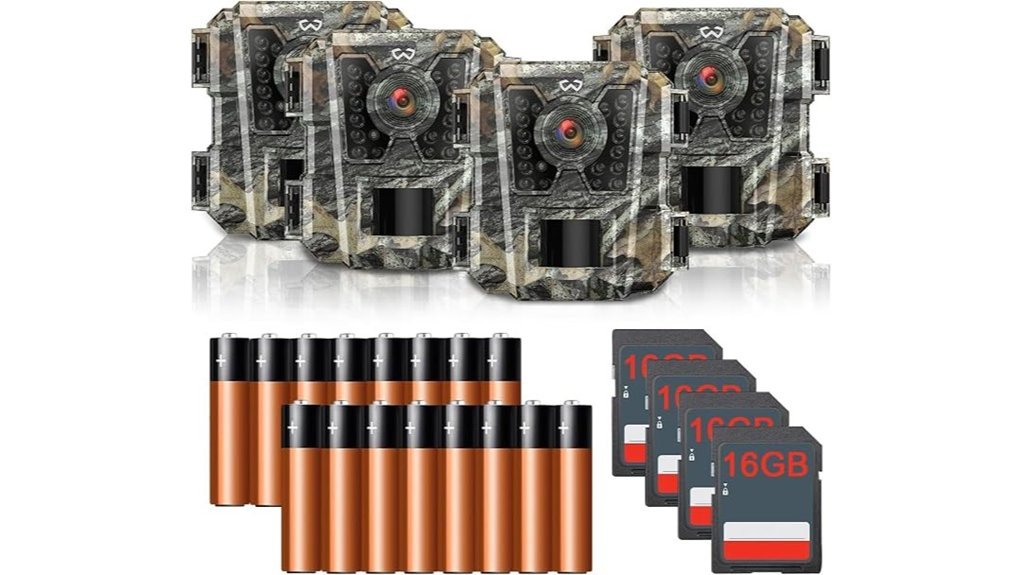
If you want broad coverage for less, I’d put the WOSODA Mini Trail Camera 4 Pack on your short list. I’ve used packs like this for deer trails and fence lines. They make life easy. You get four compact camo cameras and four 16GB SD cards. That means you can scout several spots right out of the box.
Each camera shoots 30MP photos and 1080P HD video. Day clips look clear and bright. Night shots switch to black and white and still show solid detail. The shell feels light in your hand and the camo finish blends into bark and brush like a chameleon in the woods.
What stood out to me most was the 0.3 second trigger speed. Motion pops up fast in the field. These cameras react fast too. Blink and you’ll miss it. They also run on 4 AA batteries per unit, which keeps setup simple and helps with standby life for longer use on hunting land, farms, and backyards.
I also like how easy these are to mount and start. You won’t spend half the morning digging through menus. That’s music to your ears when the air smells like wet leaves and you want to get in and out fast.
Best For: Buyers who want an affordable trail camera 4 pack for hunting, wildlife monitoring, property security, or farm surveillance.
Pros:
- Includes four mini trail cameras and four 16GB SD cards for multi spot coverage from day one
- Captures 30MP images and 1080P video with color daytime footage and black and white night vision
- Fires in 0.3 seconds and runs on 4 AA batteries for simple field use and solid standby performance
Cons:
- 1080P footage feels best for basic scouting and general security use
- Each camera uses AA batteries, so regular use works best with a battery plan
- 16GB memory cards suit light to moderate recording and fill faster with heavy video use
Quick Specs:
- Photo resolution: 30MP
- Video resolution: 1080P HD
- Trigger speed: 0.3 seconds
- Storage: 4 included 16GB SD cards
- Power: 4 AA batteries per camera
- Use case: hunting, game scouting, wildlife watching, farm monitoring, home security
Factors to Consider When Choosing a Game Camera
Factors to Consider When Choosing a Game Camera
I’ve tested trail cameras in wet timber, dusty fields, and cold dawn air. Some feel solid in your hand. Others creak like a screen door in a storm.
Start with *photo and video quality*. Sharp images help you spot antler points, fur detail, and travel patterns. Clear video adds motion, sound, and timing that still photos miss.
Next, check *trigger speed*. A fast trigger grabs the buck before it slips through frame. Blink and you miss it.
Look at *night vision range* and *detection angle* too. Good infrared reach helps after dark when the woods go quiet and the air smells like damp leaves. A wider angle covers more trail and more action.
Then focus on *battery life* and *power options*. I like a camera that keeps working through long sits and rough weather. A dead unit is about as useful as a screen door on a submarine.
Key features to compare:
- Image resolution
- Video quality
- Trigger speed
- Detection range
- Night vision
- Battery life
- Power source
- Storage capacity
Photo And Video Quality
I’ve found that resolution and trigger speed shape what you bring home. These two specs do the heavy lifting.
For still photos, check the megapixel count first. Most trail cameras now sit between 30MP and 64MP.
Why does that matter to you?
More detail means you can spot antlers, body size, and small movement in the brush. I’ve seen higher resolution pull out hair texture and ear flicks that lower settings miss. It’s like finding a needle in a haystack, except the needle has hooves.
Higher resolution also helps when you crop. You keep more sharpness in the frame. That matters when the deer stays at the edge of the shot.
For video, I always look for 1080p or 1296p recording. Better video gives you smoother motion and cleaner clips. You’ll hear leaves crunch and see natural movement with more life on screen.
Night footage can make or break a camera. Good infrared night vision with a 100 foot range helps you catch action after dark. In the field, you can almost feel the cold air and hear the woods go still while the camera keeps working.
Look for features that clean up the image too:
- Infrared LEDs for clear night capture
- Noise reduction for less grain
- Adaptive illumination for balanced light
- Fast trigger speed for moving animals
- Wide detection range for better coverage
*My quick take?* If you want sharp scouting photos and usable wildlife video, high megapixels, *solid video resolution*, and strong night vision give you the best bang for your buck.
Trigger Speed
Trigger speed can make your setup sing or sink. I’ve tested trail cameras in cold dawn air and on dusty game trails. You feel the difference fast.
Trigger speed means one thing. It’s how fast the camera snaps a photo after it senses motion. *Blink and you miss it.* A whitetail can clear the frame in a heartbeat. A coyote moves like smoke through brush. With a 0.1 second trigger speed**** you get the animal in frame more often and fewer empty shots.
For hunting and wildlife use I look for 0.5 seconds or faster. That range works well on feeders, scrape lines, and travel routes. On a tight trail you want speed. On a busy crossing you want speed even more.
Once trigger speed hits 1 second the odds shift. Fast movers can slip past before the shutter fires. You’ll hear leaves crunch and still end up with a photo of bare dirt. That gets old in a hurry.
I also like multi shot mode. It fires several images in quick bursts. That gives you a better shot at a clean photo with antlers, body shape, or direction of travel.
Here’s the quick take.
- Best trigger speed: 0.1 to 0.5 seconds
- Good for most setups: 0.5 seconds
- Better for narrow trails: Faster response
- Helpful extra: Multi shot settings
If you care about deer scouting, predator activity, or trail camera placement, trigger speed deserves your attention. In the field it’s the difference between a story and proof.
Night Vision Range
Compare the infrared type first. I’ve seen this make or break a night setup in the field. It’s the ace in the hole.
- No glow LEDs keep your trail camera stealthy around deer hogs and predators.
- 850nm infrared gives you brighter night photos.
- 940nm infrared stays stealthier with a faint glow.
Megapixels help with detail. You’ll spot antlers fur and ear tags more clearly. Still, I’ve found that low light image quality depends more on the sensor and IR range.
Check the lens aperture too. A wider aperture pulls in more light at night. That matters when the air feels wet and cold and the woods smell like pine and mud.
Weather changes your real night vision range. Fog softens the image. Rain cuts clarity. Thick cover blocks infrared fast. In dense timber your camera can hit a wall sooner than you’d expect.
Detection Angle
Detection Angle
Once I check night photos, I look at detection angle next. It tells you how wide the camera watches. Most trail cameras land between 90° and 130°. That gap feels small on paper. In the field, it changes a lot.
I’ve tested cams in damp woods where the air smells like pine and wet leaves. A wide angle grabs more side to side movement. That helps in open timber and along field edges. It also shines in spots with steady deer traffic. More ground in view. More chances at a clean shot.
For a trail or scrape, I like a tighter view. It keeps coverage focused. It also cuts down on empty frames. Think of it as a flashlight beam. Wide spreads out. Narrow hits the sweet spot.
You should pair angle with trigger speed. That combo is where the rubber meets the road. A wide detection zone with a fast trigger catches animals before they slip past. A slow trigger can miss that soft crunch of hooves and the flick of a tail.
Keep camera placement in mind too.
- Wide angle, 110° to 130°
- Best for open woods
- Great for field edges
- Useful on high traffic crossings
- Narrower angle, 90° to 100°
- Best for trails
- Great for scrapes
- Useful near feeders
The right detection angle helps you cover the spot that matters most. *That’s how you get fewer blanks and better wildlife photos.*
Power And Battery
Power and battery life shape your whole trail camera experience. I’ve felt that cold AA pack in my hand at dawn. It gets old fast. Most game cameras use 4 to 8 AA batteries. That choice decides how often you trek back through mud and pine scent for a battery swap.
Want longer time in the field? Pick a low power trail camera. A solid standby mode helps too. It stretches battery life during slow hours. Think of it as money in the bank.
Speed matters too. A fast trigger speed grabs more action. It also uses more juice. I’ve seen quick cameras burn through cells after a busy week. If you run a camera on an active trail, balance speed with battery life.
Look at the power setup before you buy. Some cameras support rechargeable battery packs. That saves cash over time. It also cuts waste. Others work with solar panels for trail cameras. That gives you more runtime with less hands on hassle. Nice and easy.
Here’s what I check first:
- Battery type, AA batteries or a rechargeable pack
- Battery capacity, how long it lasts in the field
- Power saving mode, for better standby life
- Solar compatibility, for extended runtime
- Trigger speed, because faster capture often uses more power
Match the power system to your routine. If you check cameras every few days, almost any setup works. If you leave them deep in the woods for weeks, *battery efficiency* becomes king.
Storage Capacity
Storage Capacity
Storage capacity sets how long your trail camera stays on watch before the card fills. I always check the max card size first. That saves a headache in the field.
Most game cameras support these formats:
- SD
- SDHC
- SDXC
- Up to 512GB on many models
More space gives you more time. You can leave the camera in the woods longer. You spend less time swapping cards. You spend more time scouting deer or tracking movement.
Think about how you shoot. High resolution photos chew through space fast. Long video clips do the same. I’ve heard cards click full after a busy night like popcorn in a hot pan.
Compression matters too. If your camera records in H.264, you fit more video on the same memory card. That helps on long hunting trips. It also helps in remote spots where you want fewer visits.
I also care about card health. A fresh format keeps things smooth. The card should feel clean and ready, like a sharp knife in camp. Format it often. Keep the contacts dry and free of grit. Your camera stays fast and reliable when that buck finally walks by.
Weather Resistance
Weather Resistance
I’ve had trail cameras sit through cold rain and sleet that stung my face. Weather resistance matters fast in the field.
Start with an IP66 rating or better. That level seals out heavy rain and wind blown snow. It also helps during muddy storms and dusty days.
Next check the housing. A hard shell feels solid in your hand and keeps water out. You want tight seals and clean door latches. Think of it as a raincoat for your camera.
Temperature range matters too. I look for models rated from minus 22°F to 158°F. That gives you steady performance in deep winter and blazing summer heat.
Night use counts in rough weather. Low glow infrared LEDs give you clear after dark shots with less visible flash. That helps on wet nights when the woods smell like pine and soaked leaves.
Power matters more than most buyers think. Storms can turn a quick check into a slog through mud. A long lasting battery setup saves time and keeps your game camera ready.
Here’s what I check first:
- IP66 or higher waterproof rating
- Sealed housing
- Wide temperature range
- Low glow IR LEDs
- Long battery life
- External power option
Pick a camera built for abuse. If the forecast looks like a washing machine then your trail cam should keep clicking.
Conclusion
The best game camera depends on how you hunt and where you scout. I’ve tested these units in wet timber and dusty field edges. Some shine with fast trigger speed. Others win with crisp night photos or smooth cellular plans.
Start with your priority. *Speed matters.* *Image quality matters.* *Battery life matters.* Pick the feature that gives you the clearest edge.
Here’s the simple breakdown:
- Fast trigger speed for active trails and quick crossings
- Sharp night vision for dark timber and late movement
- Cellular updates for easy remote scouting
- Budget multi packs for wider property coverage
- Weather resistance for rain soaked woods and cold dawn sits
A good trail camera should feel solid in your hand. The latch should snap shut with a clean click. The housing should shrug off mud and pine grit like a champ. That’s the kind of gear I trust.
Compare performance. Compare durability. Compare ease of use. Then choose the camera that fits your season like a glove. Pick well and you’ll scout smarter. Hunt sharper. Stay one step ahead all season.