IEEE PAPER DOWNLOAD
This letter proposes a boost dc–dc converter topology with the novel capability of canceling the input current ripple at an arbitrarily preselected duty cycle. This is accomplished without increasing the count of the number of components in contrast to other solutions available in the literature. In addition, the converter features a high voltage gain without utilizing extreme values of duty cycle or boosting transformers. These features make the converter ideal to process electric power coming from low‑voltage power‑generating sources, such as renewables. This paper provides details on the principle of operation via topological considerations and a mathematical model. The key factor of reactive component sizing is also discussed in detail. The converter was validated in the laboratory through the construction of a hardware prototype.

PROJECT OBJECTIVE
The main aim of this project is to study the current status of DC‑DC converter in small power generating sources. Generally a boost converter is required to boost the low level renewable voltage and link this voltage to an inverter. This work studies a transformer‑less boost converter and completes the following objectives:
- To develop a transformer‑less high step‑up dc‑dc converter that can achieve input current ripple cancellation without operating at extreme duty cycle.
- As transformers are bulky, heavy‑weighted and expensive, this project aims to implement a converter circuit without a transformer, providing high step‑up voltage.
- To develop a boost converter with a reduced number of power‑electronic switches compared to conventional converters, thereby lowering switching losses, electromagnetic interference, and harmonic distortion.

CIRCUIT


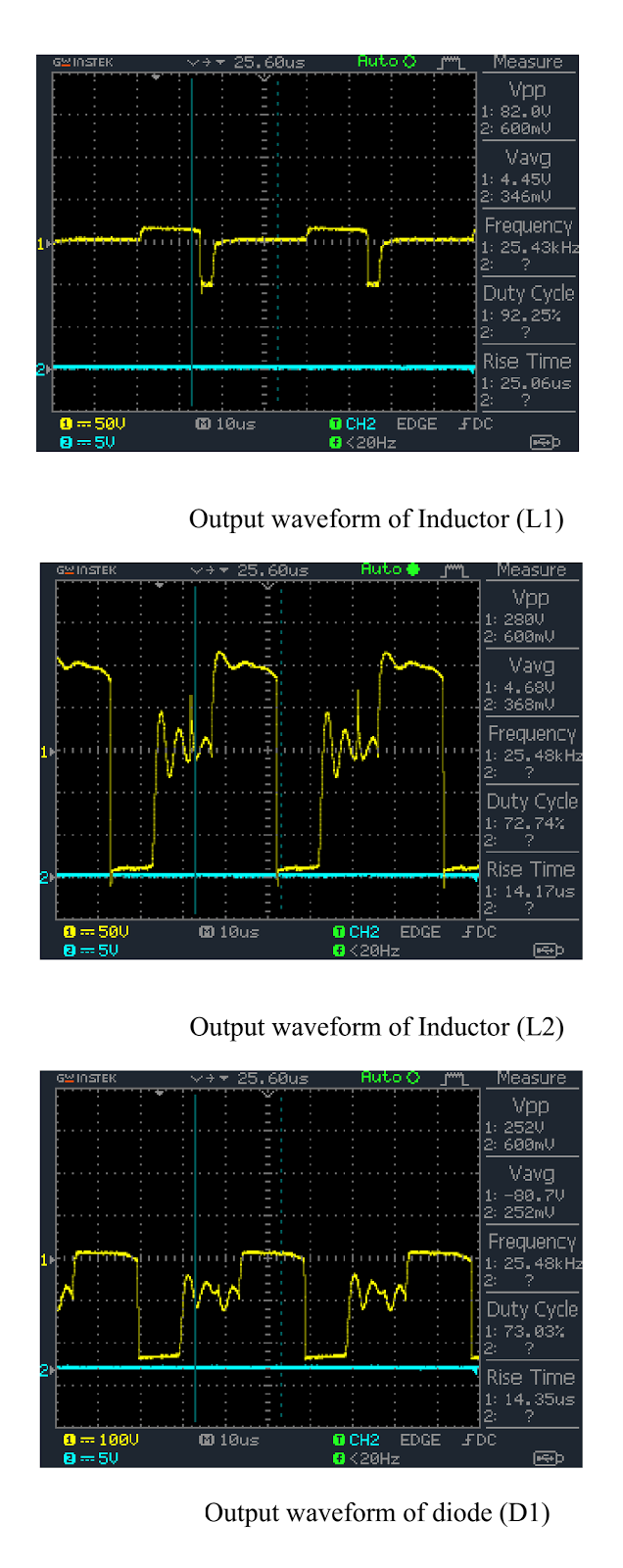
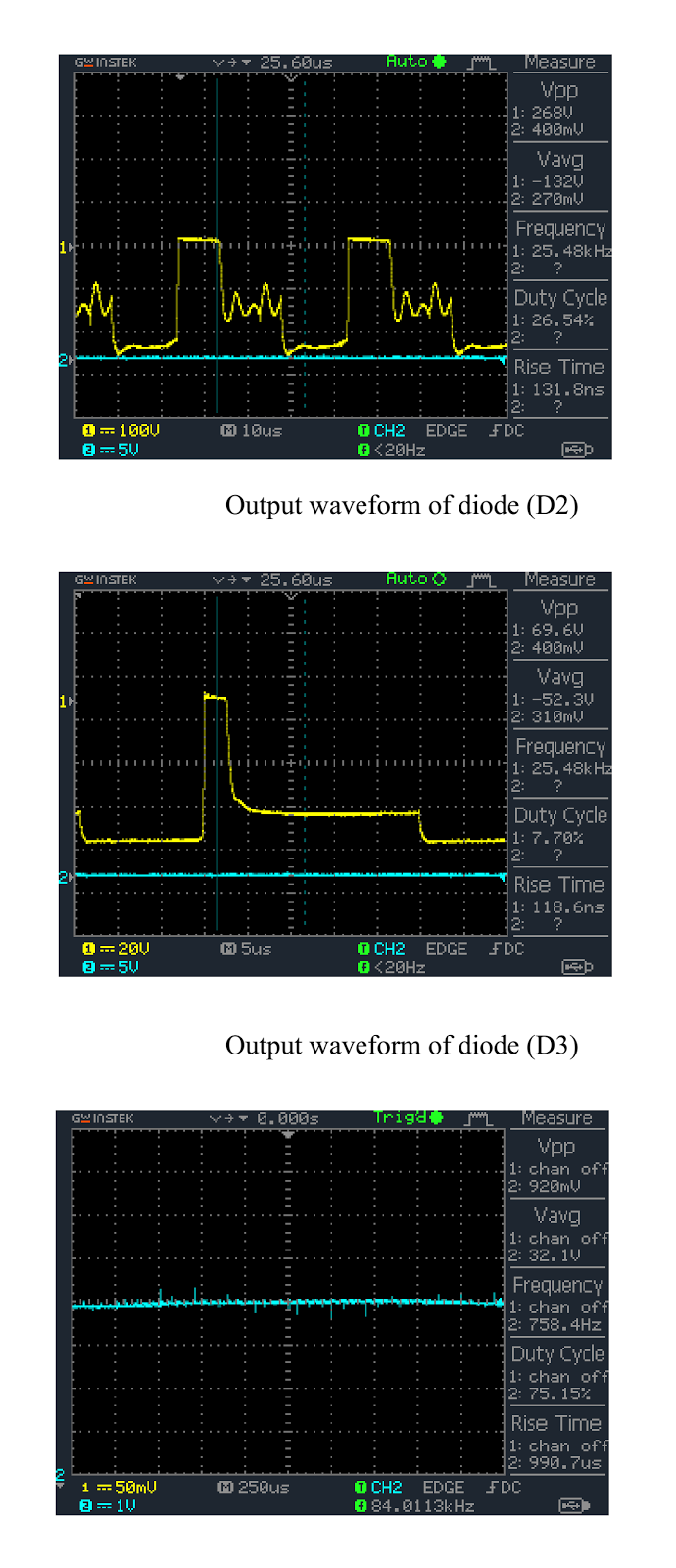
WAVE FORMS