
You want a kit that *teaches while you build*. I’ve tested these on real desks with wires that bite your fingers and boards that hum faintly with power.
Arduino Starter Kit K000007 feels like a patient teacher. The booklet walks you step by step. You plug parts in and *it just clicks*. It’s the “training wheels that actually work” kind of kit.
ELEGOO UNO R3 kit gives you more bang for your buck. I ran through the 20+ projects and each one builds skill fast. The parts feel solid in hand and the breadboard grips wires with a satisfying snap. It’s a steal that punches above its weight.
Mega R3 Ultimate kit opens the floodgates. More sensors. More wires. More ideas. You’ll smell warm plastic after long sessions and hear relays tick like tiny clocks. It suits you if your brain races ahead of basic builds.
Focus on what matters:
- Clear tutorials that guide your first wins
- Quality components that feel sturdy
- Project variety that keeps you curious
Pick your kit and dive in. The right one will fit like a glove as your skills grow.
Arduino Starter Kit K000007 with 12 Projects
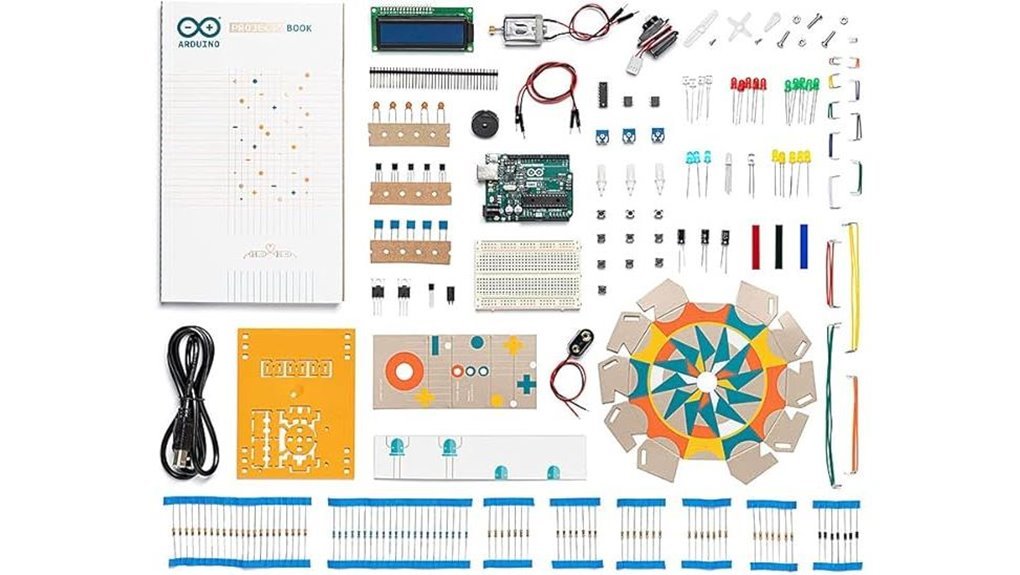
If you want a clean start in electronics, I’ve used the Arduino Starter Kit K000007 and it delivers a smooth ride. You open the box and feel solid parts in your hands. The faint smell of fresh boards hits you. You plug in your first circuit and hear that tiny click of success.
You follow a clear path. The included guidebook walks you step by step. Each page builds your skill like stacking bricks. I found the pacing steady and easy to follow.
You code. You wire. You see results fast. That feedback loop keeps you hooked.
Best For:
Beginners and hobbyists who want a guided path into Arduino and DIY electronics.
What stood out to me:
- *Step by step guidebook* keeps you moving with clear wins
- *12 hands on projects* build real skills fast
- *Genuine Arduino parts* feel solid and last long
What to keep in mind:
- You get 12 core projects so you may want expansion later
- The content fits early learners best
- The price reflects official Arduino quality
Each project feels like turning a key in a lock. You gain confidence with every build. By the end, you think like a maker and act like one too.
ELEGOO UNO R3 Starter Kit with Tutorial
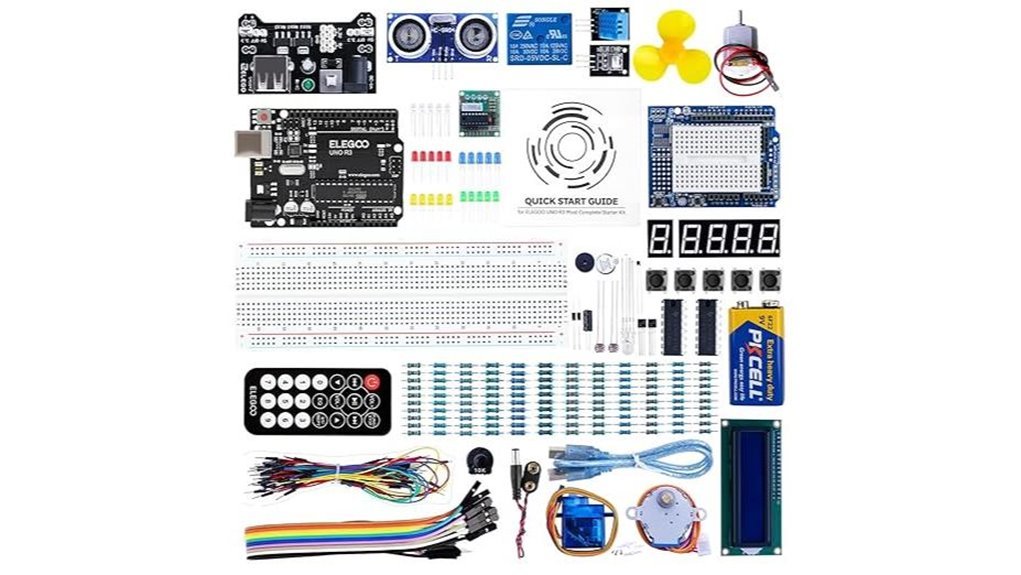
Designed for true beginners, this kit gives you a clear path from zero to working circuits. I’ve used it on a real desk with wires everywhere, and it feels like a friendly first lab. The ELEGOO UNO R3 board works right away with the Arduino IDE. You plug it in and start building within minutes.
You follow 22 plus hands on lessons that guide each step. The PDF reads like a calm instructor at your side. Each project clicks into place like puzzle pieces. You smell warm plastic and feel the slight snap of jumper wires as you connect parts. It builds confidence fast.
The kit includes a pre soldered LCD1602 screen that saves time. I liked that touch since soldering can slow you down early on. You also get a power supply module and a 9V battery for quick tests. Think of it as training wheels that still let you ride.
It supports UNO R3 and R4 plus MEGA 2560 and NANO boards. That gives you room to grow without switching ecosystems.
Best For: You want a guided start with clear lessons and real builds.
Pros:
- 22 plus lessons that move step by step
- Pre soldered LCD1602 saves setup time
- Works with multiple Arduino boards
Cons:
- 9V battery suits light projects
- PDF format feels simple
- Parts fit beginner level builds only
ELEGOO Mega R3 Ultimate Arduino Starter Kit
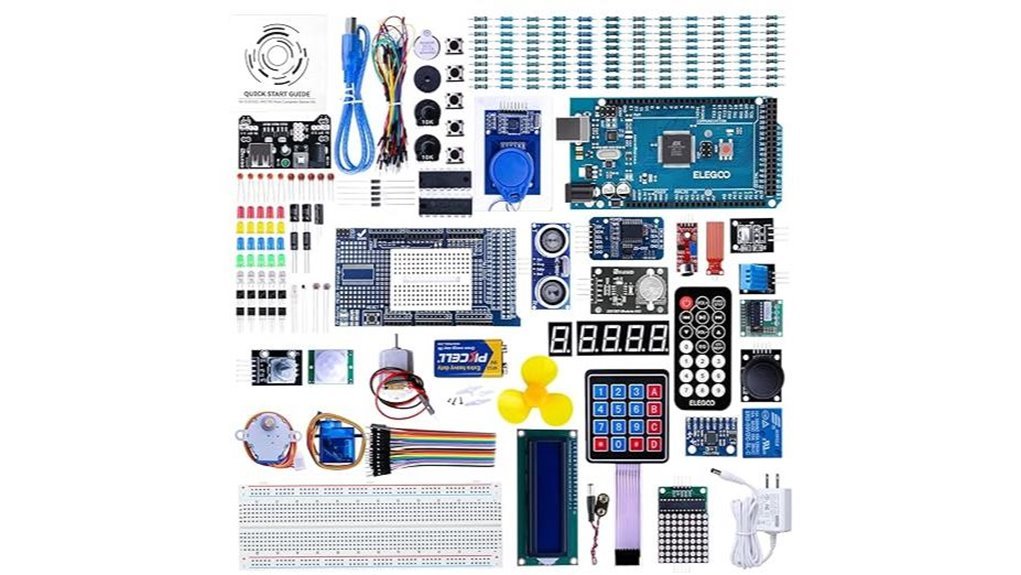
A starter kit that grows with you. I’ve built dozens of projects with this set and it keeps giving. You get the MEGA2560 board with real heft in your hand. It feels solid and ready. The kit packs 200 plus parts so ideas flow fast. Wires click in with a soft snap. The LCD1602 glows bright on first boot. The GY-521 arrives pre soldered so you start right away. Think of it as a Swiss Army knife for Arduino.
The guide drives real progress. I followed the PDF with 35 plus lessons and saw quick wins. Each step builds skill. You move from blinking LEDs to sensors and displays. The Arduino IDE setup stays smooth and familiar.
Storage stays tidy. The organizer box keeps LEDs and ICs in place. You hear a light rattle when you move it. Your desk stays clear and focused.
Best For: Beginners and hobbyists who want a full Arduino kit that scales into advanced builds.
Pros:
- 200 plus components with MEGA2560 for large projects
- 35 plus guided lessons and plug in modules for fast starts
- Organizer box keeps parts sorted and easy to grab
Cons:
- Large scope can feel big for first time users
- PDF format suits self paced learners over app based paths
- Wide part set means some pieces see less use in light builds
Why it stands out: You get range and depth in one box. It’s a long road kit that keeps pace with your ideas.
LAFVIN Super Starter Kit for Arduino-Compatible Boards
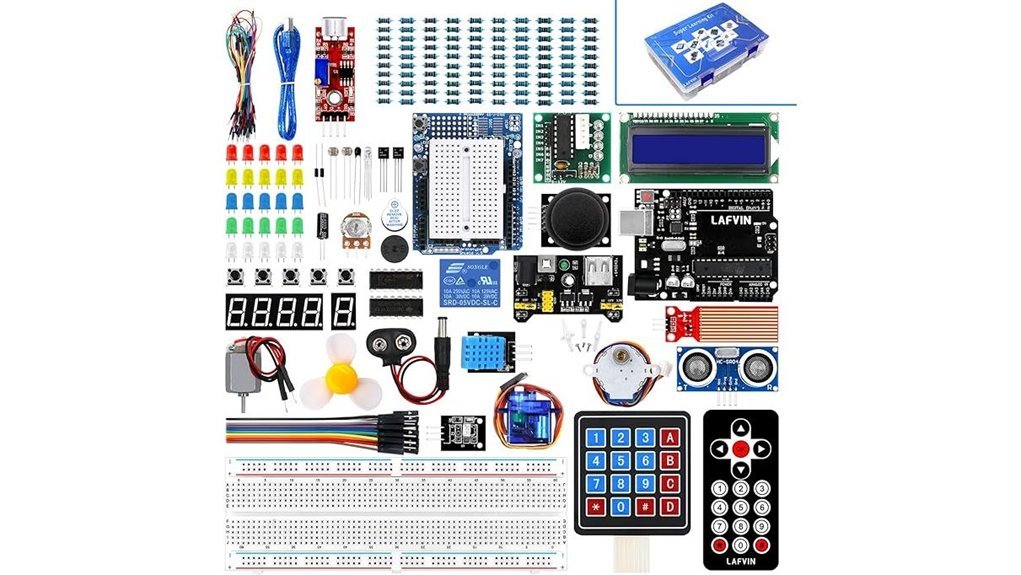
Beginners want a clear path. I’ve tested this kit on a busy bench, and it feels like a friendly guide that sits beside you. The LAFVIN Super Starter Kit gives you a smooth start with guided lessons and a wide mix of parts. You plug in the R3 Mega2560 or Nano and open the Arduino IDE, and you’re off. The parts click with a soft snap, and the breadboard grip feels firm in your fingers. It smells faintly like fresh plastic and new boards, like opening a toolbox for the first time.
You follow 20 lessons that build skill step by step. Each lesson ships with code and libraries and clear notes. I spun a servo and heard that soft whirr, then drove a stepper with a steady tick. Displays light up fast. The LCD1602 glows green and the pins come pre-soldered, so you skip extra work and get straight to code. Think of it as training wheels that roll smoothly.
Best For: You want a complete start with Arduino and hands on electronics plus guided projects.
Pros:
- You get 20 plus lessons with code and libraries for fast progress
- You explore motors and displays and sensor modules in one box
- The LCD1602 has pin headers so setup feels quick and clean
Cons:
- You may prefer a smaller set if you like a lighter first step
- You may want higher grade parts for long term builds
- You may look for deeper projects as your skills grow
Why it works: You learn by doing. You wire a circuit and watch it come alive. The kit keeps things simple and keeps you moving, like a map that always points forward.
ELEGOO UNO R3 Complete Starter Kit (200+ Components)
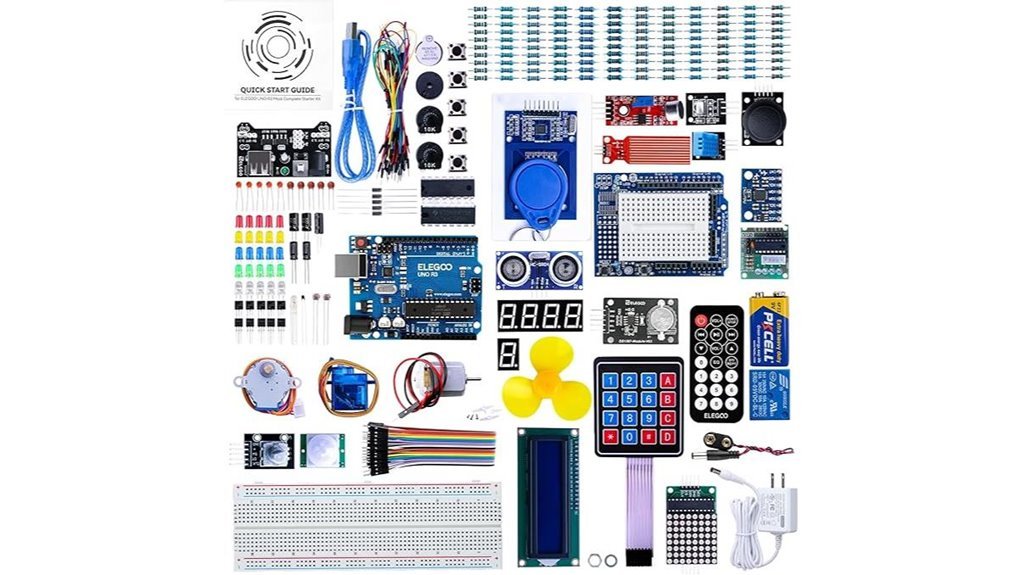
Packed with over 200 parts and 30 guided lessons, I found this kit feels like a *toolbox that sparks ideas*. You open the case and hear soft clicks of plastic bins. You feel smooth boards and crisp pins. It moves you from zero to real builds fast. You get an UNO R3 with USB support and Arduino IDE support. You also get 200 plus parts across 63 types. Think sensors, motors, displays, LEDs, and resistors. I followed the PDF and ran the code in minutes. The layout keeps every part in its place. Modules like DHT11, RFID, IR, and RTC push your projects further. The one year warranty adds calm.
Best For: Beginners and hobbyists who want a clear path into Arduino with a wide mix of parts.
Pros:
- You start fast with 200 plus parts and 30 lessons
- You build many projects with sensors, motors, RFID, and RTC
- You stay organized with a tidy case and ready code
Cons:
- The spec sheet lists extra items like CPU and Linux OS which can confuse
- The lessons stay simple which suits early stages
- The parts feel light which suits practice builds over long term rigs
Arduino Starter Kit R4 UNO WiFi (K000007_R4)
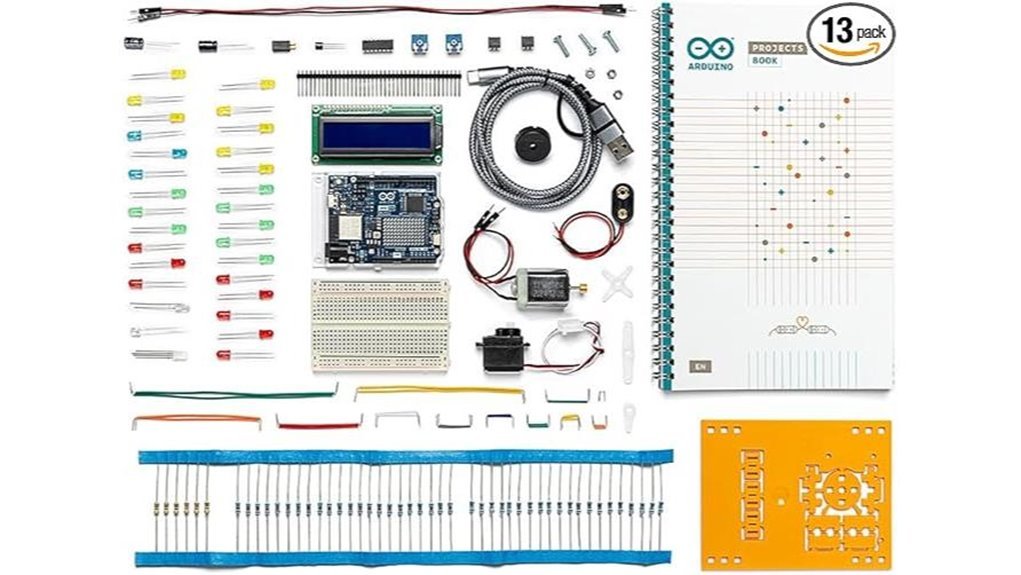
Arduino Starter Kit R4 UNO WiFi Review
I’ve used this kit on a busy desk with wires warm to the touch and a faint plastic smell from fresh parts. It feels like a smooth on ramp into electronics. You get guided steps and fast wins. Think of it as training wheels that actually teach balance.
The UNO R4 WiFi board brings steady power and built in wireless. You connect to Arduino Cloud in minutes. I tapped code on my phone and saw LEDs blink right away. The AI coding assistant gives hints that click fast. You read less guesswork and write cleaner code.
You move through 13 projects that build real skills. Each lesson stacks on the last like bricks in a wall. The printed book feels sturdy and clear. Diagrams pop and parts fit your hand with ease.
Best For
If you want a clear path into coding and circuits this kit fits. I’d hand it to a student on day one. You get structure and feedback without friction. It’s a friendly coach in a box.
Pros
- 13 guided projects that build skill step by step
- WiFi and Bluetooth for quick cloud control
- AI coding assistant that speeds learning
- Printed book with crisp visuals and simple steps
- Works on Windows macOS and Linux
Cons
- Memory feels tight on larger sketches
- Advanced users outgrow the projects fast
- Return rules feel strict after opening
Why It Stands Out
You get a connected Arduino experience from the start. I liked the instant feedback from cloud tools. The board stays cool and stable during long sessions. It turns first builds into small wins you can see and hear.
Arduino Official Starter Kit Deluxe Bundle with Book
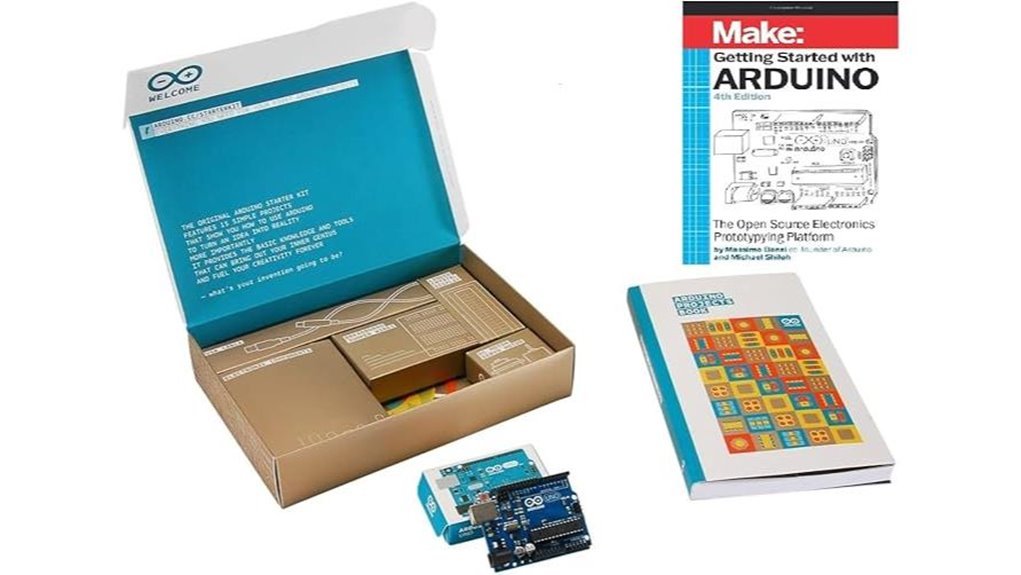
For a true beginner path, I keep coming back to the Arduino Official Starter Kit Deluxe Bundle with Book. I’ve used it on a cluttered desk with wires everywhere and it just clicks. You plug it in and the LED glow feels like a small win. Think of it as training wheels that actually teach balance.
You get the Arduino Uno plus a tidy set of parts. The breadboard feels solid under your fingers. Sensors snap in with a soft push. The USB cable connects fast and the IDE responds right away. The 170 page guide walks you step by step. I followed it like a recipe and each project worked on the first try. That builds real confidence.
You build interactive systems early. Lights blink on cue. Motors hum with a low buzz. The LCD shows your first lines of code in plain text. You start to connect ideas fast. Coding meets circuits in a clear way. It’s a smooth ramp into IoT basics and simple robotics.
Best For: Beginners, students, and hobbyists who want a guided hands on start with Arduino and basic electronics.
Pros:
- Full kit with core parts and a clean storage box
- Clear 170 page guide that teaches step by step
- Parts fit well and run smoothly with the Arduino IDE
Cons:
- Scope suits entry level projects and simple builds
- Price reflects official branding and curated parts
- Some later projects expand with extra components
SunFounder Elite Explorer Kit Arduino Uno R4 WiFi
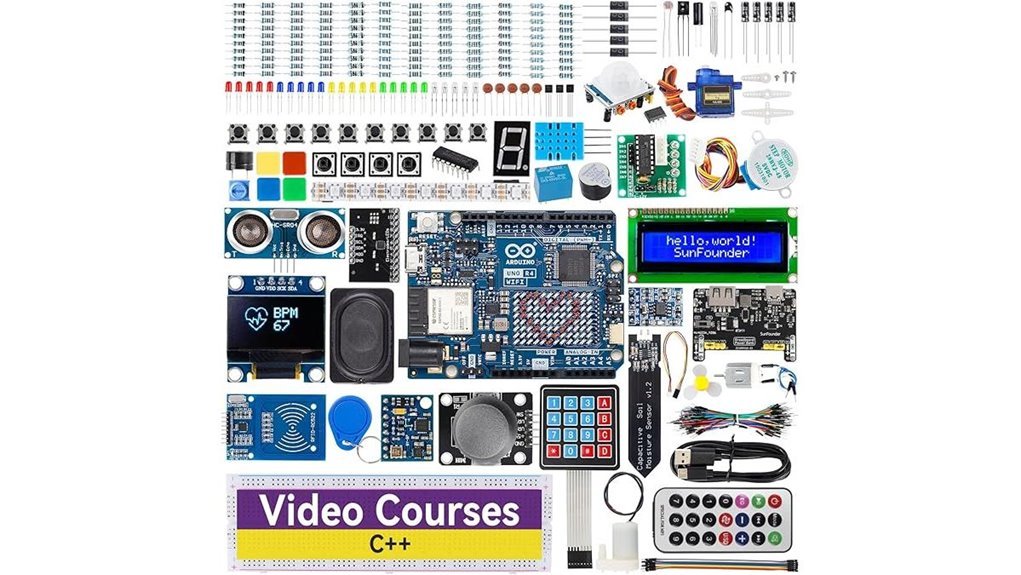
If you want a kit that grows with you, I’d pick the SunFounder Elite Explorer Kit with the Arduino Uno R4 WiFi. I’ve used it on my bench and it feels like a toolbox that keeps giving. The board runs a 32 bit processor and built in WiFi and Bluetooth. You hear relays click and see LEDs glow as projects come alive. It smells faintly like fresh PCB when you open the box.
You get over 300 parts. Sensors feel solid and wires grip tight. A rechargeable battery module adds freedom from your desk. It plays well with Uno R3 and Nano boards so you stay flexible. Think of it as a Swiss Army knife for Arduino fans.
Learning stays clear and guided. You follow 60 video lessons with Paul McWhorter. You build 50 projects that scale from basics to IoT. You write Arduino C++ and send data over WiFi to simple apps. Forums and open source guides keep ideas flowing. A one year warranty adds peace of mind.
Best For:
You want a full Arduino kit with WiFi projects and guided lessons from day one.
Pros:
- WiFi and Bluetooth built in plus a fast 32 bit processor
- 60 plus video lessons and 50 plus projects keep you moving
- 300 plus components with support for Uno R3 and Nano boards
Cons:
- Large kit size creates a busy first look
- Arduino C++ takes time to feel natural
- Price sits above entry kits for beginners
Smraza Arduino Starter Kit with Breadboard and Components
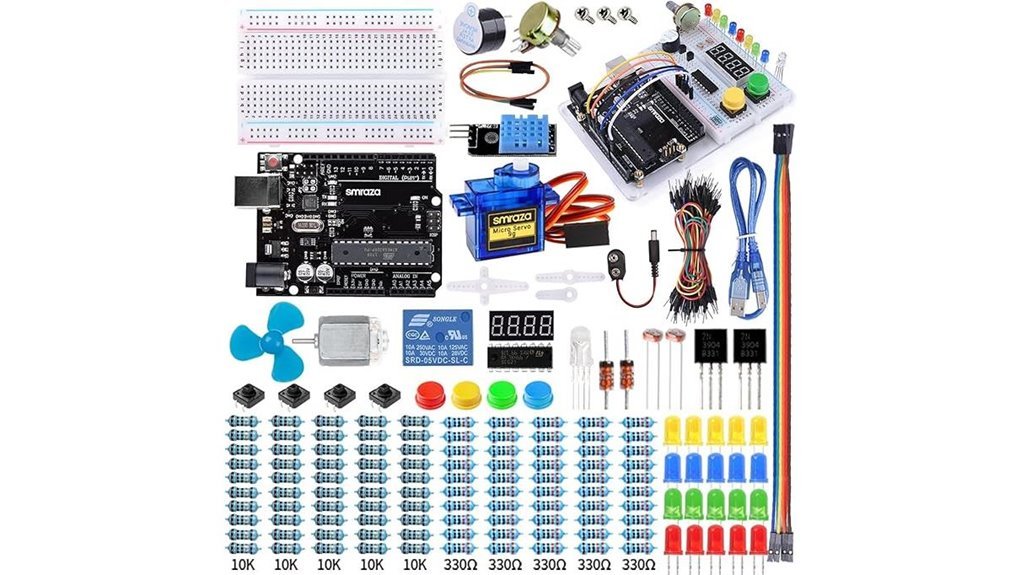
I’ve built circuits with this kit on a cluttered desk and it feels like a solid first step. You open the box and smell fresh plastic and metal pins. Parts click into the breadboard with a soft snap. It’s plug and play and it feels like riding a bike for the first time.
The Smraza Starter Kit gives you a clean path into Arduino. You get a compatible controller board and a 400 point breadboard right away. I like how fast you can wire a circuit and see LEDs glow. You learn by doing and that sticks.
Sensors add real feedback. The LM35 reads heat from your fingers. The DHT11 tracks air data in your room. A photoresistor reacts to light like a tiny eye. Motors hum and the servo twitches with a faint buzz. It all feels alive.
The PDF guide walks you through 16 projects. Code loads fast and examples stay clear. You follow along and build muscle memory. Support replies arrive and help you keep moving.
Best For: Beginners and hobbyists who want a guided Arduino starter kit with room to explore
Pros:
- Wide component set for many Arduino projects
- Clear tutorials with code and 16 lessons
- Works with R3 Mega 2560 and Nano boards
Cons:
- Basic sensors keep projects simple
- Guide uses terms that feel technical at first
- Wires and breadboard feel light in hand
ELEGOO UNO R3 Starter Kit with Tutorial
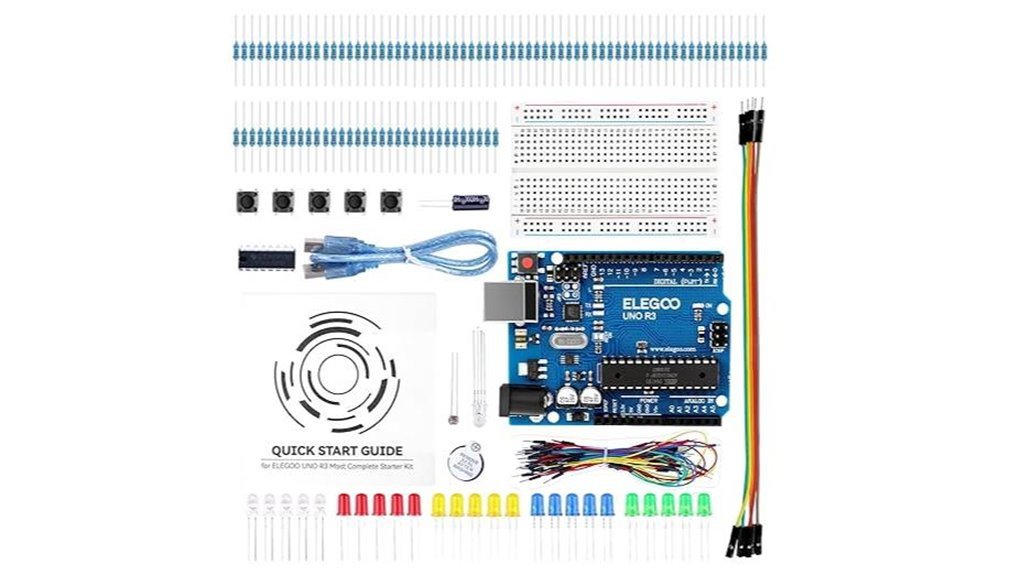
A standout pick for first time Arduino users, the ELEGOO UNO R3 Starter Kit gives you a smooth start right out of the box. I opened it and felt that clean plastic scent and saw every part laid out like a well set toolbox. You plug it in and get to work fast. No guesswork.
The included PDF tutorial walks you through real builds step by step. I followed it like a recipe and each project clicked into place. You learn by doing. That sticks. The code examples feel clear and simple.
You get a UNO R3 board plus a USB cable and a stack of beginner components. Each piece feels light yet solid in your hands. Wires snap in with a soft click. It feels like building with smart Lego.
Since it works with the Arduino IDE and boards like MEGA 2560 and NANO, you can grow your skills over time with ease. Think of it as your training wheels that turn into a full bike.
Best For: Beginners who want a guided Arduino starter kit with quick setup and clear lessons.
Pros:
- You get UNO R3 board and core parts for fast setup
- The step by step PDF guide keeps you on track
- Works with Arduino IDE and other boards for growth
Cons:
- The CD format feels old school
- The kit focuses on basic projects
- Advanced users may want deeper lessons
Factors to Consider When Choosing an Arduino Starter Kit for Beginners
I’ve tested a pile of Arduino kits and some feel like a toy box while others feel like a real lab. You want that sweet spot.
Start with the component mix. You want LEDs that click bright and sensors that feel solid in your hand. More parts means more builds and more “aha” moments. Think breadboards, resistors, motors, and displays. Variety keeps things fresh.
Next comes part quality. I’ve seen flimsy wires that bend like wet noodles. Good kits feel firm and snap clean into place. Official Arduino boards or trusted clones give stable performance. That saves you from weird bugs later.
Look at the learning material. Clear guides read like a friend talking you through steps. Good tutorials walk you from blinking lights to real projects. It’s your map and your safety net.
Now check the skill fit. Some kits jump in fast like a deep pool. Others ease you in like a calm shore. Pick one that matches your pace so you keep momentum.
Finally think about board compatibility. I like kits that grow with you. Arduino Uno is a strong start. Extra support for Mega or Nano adds room to expand. You plant one seed and grow a whole garden.
Component Variety And Quantity
I’ve opened many Arduino kits on my bench. The smell of fresh PCBs hits first. Then the soft rattle of parts in bags.
You want range from day one. More sensors mean more ideas. More motors mean motion you can feel. A bright LCD clicks on and you grin.
*Variety drives curiosity.* It’s the spice of the kit.
Basic parts matter too. You’ll touch resistors and feel their tiny ridges. Capacitors teach timing in a simple way. You see cause and effect fast.
Quantity changes how you learn. You burn a resistor and grab another. You wire it wrong and try again. That freedom builds skill.
Pre soldered modules save time. You skip fiddly pins. You focus on code and behavior. The board beeps and blinks right away.
Clear labeling helps a lot. I like kits that name every part. You map each piece to a function in your head.
Here’s what I look for:
- Sensors like ultrasonic and light
- Actuators like servo and DC motor
- Displays like LCD or OLED
- Core parts like resistors and capacitors
- Pre soldered modules for quick starts
- A printed parts list with values
*More parts keep the fire lit.* You try one idea and chase the next. Your builds grow from simple to clever over time.
Quality And Authenticity
Variety pulls you in. *Quality keeps you building.*
I’ve handled plenty of Arduino starter kits on my bench. You feel the difference fast. Cheap parts feel light and loose. Good parts feel solid in your fingers.
Focus on parts that last. You want components that survive repeat use. I’ve pushed boards through long sessions and heat cycles. Strong builds stay steady like a rock.
Authentic Arduino compatible parts matter. They fit clean and snap in with a soft click. You get stable signals and smooth uploads. Your code runs clean and your circuits behave.
You notice it in small ways:
- Pins slide in with a firm grip
- Wires hold without wiggle
- Boards stay cool during use
- LEDs glow bright and steady
Organization helps too. Clear packaging saves time. Labeled bags let you grab parts fast. You spend more time building and less time digging.
Some kits add guided projects that match the hardware. I’ve followed these guides and they flow well. Steps feel clear and logical.
*Good gear feels like a well tuned instrument.* It responds the way you expect. That builds trust. And you learn faster with every project.
Learning Resources Included
A good kit feels like a guide in your hands. I open the box and I hear parts click and wires rustle. You get direction fast.
Most kits pack PDF tutorials with clear steps. You follow along and build real projects. Many sets include 20 plus builds so your skills grow in layers.
I like kits with code libraries and datasheets. They explain each part in plain terms. You learn what each sensor does and how code drives it.
Some kits include a printed book. The paper feels smooth and easy on the eyes. You work without a screen and stay focused.
Others add online guides and video lessons. You watch fixes in real time. You solve issues before they stall you.
A few brands toss in a certification voucher. You test your skills and track progress. It adds a small goal that keeps you moving.
Think of it like training wheels on a bike. You gain balance fast and ride farther with each try.
Board Compatibility Options
I’ve flashed code on these boards at midnight while the faint smell of warm plastic filled the room. You want that smooth first upload.
Start with a board the Arduino IDE loves. Think UNO R3, Mega 2560, or Nano. You plug in and it just works. Like butter on warm toast.
Pick a kit that supports more than one board. You gain room to grow. You swap parts without friction.
Watch the pins like a hawk. Match layout and voltage every time. A clean fit feels solid in your hand and saves your project.
Check the docs before you buy. I look for clear notes on board support and coding tools. Good guides sound like a calm teacher.
Grab kits with tutorials built for your exact board. You follow along and your LEDs blink on cue. No guesswork. No noise. Just results.
Quick checks I always run:
- Board support in Arduino IDE
- Pin layout match with modules
- Voltage match for sensors
- Clear documentation
- Board specific tutorials
Skill Level Suitability
Match the kit to your level. I’ve tested dozens, and this step saves hours of stress.
Start simple. You open the box and smell fresh plastic and clean metal. It should feel clear right away. *Step by step guides* matter. They lead you from first wire to working build.
You want progress. Choose a kit that grows with you. I like ones that add small jumps in challenge. Think of it like climbing a ladder. One rung at a time.
Good resources speed things up. Video lessons help. Sample projects show real use. You hear the click of parts fitting right, and it sticks in your mind.
Quality parts make a difference. Cheap wires feel rough and loose. Solid parts snap in place and stay firm. Your build works on the first try.
Pick hands on kits. You learn fast by doing. Your fingers move, your brain follows. Confidence builds like muscle.
Look for kits that guide you forward:
- Clear instructions with images
- Gradual project levels
- Video or app support
- Reliable components
- Real project examples
A good kit keeps you moving. It builds skill without friction.
Connectivity And Features
I’ve handled plenty of kits and this part decides your first win or first headache. It feels like flipping a light switch.
Start with wireless.
You want WiFi and Bluetooth built in. Your board talks to your phone with a quick tap. You hear that soft connect chime and it just works.
Check Arduino IDE support.
I use it daily because it feels simple and fast. Code uploads in seconds. You stay in flow.
Pick kits with rich modules.
More sensors means more play. Buttons click. LEDs glow warm. You build ideas fast.
- Temperature sensors
- Motion detectors
- Displays
- Relays
Power matters.
A faster chip runs smooth. Your code stays snappy. You feel the difference right away.
Guides seal the deal.
Great tutorials walk you step by step. You follow along like a recipe. It keeps frustration low and momentum high.
Think of it like a toolbox. The right pieces fit in your hand and your ideas click into place.
Conclusion
You’ve seen the kits. You’ve sized up the parts. I’ve built with them, and I felt that same pull.
Pick a kit that *grabs your hands*. The plastic clicks. The wires bend soft. The board lights with a crisp blink. That first LED feels like striking a match in the dark.
Choose with care. The right Arduino starter kit teaches as you build. It feeds your curiosity step by step. I saw simple circuits grow into full projects fast.
Look for this in a solid kit:
- Clear Arduino tutorials that guide each step
- Breadboard and jumper wires that feel firm and flexible
- Sensors and modules that click and respond fast
- A board with stable USB connection
Start small. Then build again. One blink turns into motion. One project turns into ten.
*It’s a spark that keeps catching.*